
Your alarm decides when you get up. It does not decide when your body is ready to be awake. Deep inside your brain, a separate timekeeper sets the schedule for alertness, hunger, body temperature and sleepiness, and it keeps running whether or not your phone agrees with it.
When the two are in sync, you fall asleep without a fight and wake up reasonably human. When they drift apart, you get the familiar mess: tired at 10 a.m., crashing at 3 p.m., wide awake at midnight. This article explains how to reset your circadian rhythm naturally by working with that clock’s own timing signals. It builds one habit at a time, in an order that makes sense, and relies on light, food, movement and darkness rather than supplements or drugs.
Your body runs on a clock, and it is not your alarm
“Circadian” comes from the Latin for “about a day,” and the word is accurate. Your internal rhythm runs close to 24 hours but not exactly. In most people it runs slightly longer than 24 hours, which means that without regular cues from the outside world, the clock tends to slide later and later. Night owls are not lazy; they are often people whose clocks have drifted and have not been corrected.
The key point is that the clock needs correcting every day. It is not set once and left alone. Each day’s cues, mainly light, tell it where “morning” is. The more consistent and strong those cues are, the more reliably everything downstream runs on time: sleep, energy, appetite, mood and hormone release.
That is also why the plan below is built around sequence. Each habit gives the clock a clearer signal, and each one works better when the one before it is already in place.
How the master clock uses light to time cortisol and melatonin
The master clock is a small cluster of nerve cells called the suprachiasmatic nucleus, or SCN. It sits in the hypothalamus, just above the point where the optic nerves from your two eyes cross. That location is not an accident. The SCN gets direct input from the eyes, and light is its most powerful time cue.
The retina contains specialised cells, called intrinsically photosensitive retinal ganglion cells, that contain a pigment named melanopsin. They are not used for forming images. They report how bright the environment is, and they respond most strongly to the blue-weighted light that dominates daylight. That signal travels to the SCN, which uses it to anchor the clock’s sense of time.
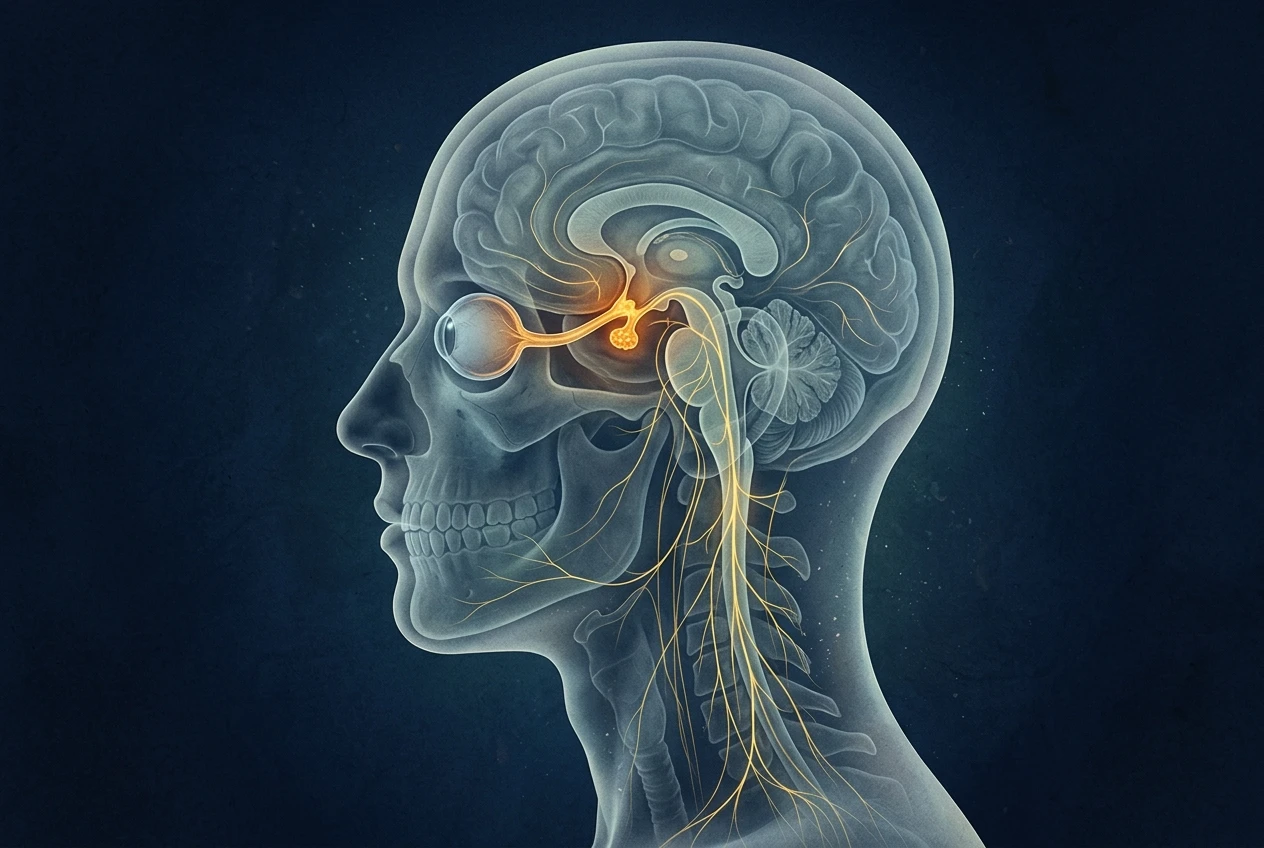
The SCN then passes timing information to the rest of the body, including two hormones that matter here:
- Cortisol starts rising in the early hours of the morning, before you wake, and is highest shortly after waking. It declines through the day and is lowest around the middle of the night. Its morning rise helps you feel alert and ready to get going.
- Melatonin is released by the pineal gland when the SCN signals that it is night. Levels begin to rise in the evening under dim light, peak in the middle of the night and fall toward morning. Bright light, especially in the evening, can delay or reduce that rise.
Think of it as a simple division of labour. Light tells the SCN what time it is, the SCN tells cortisol when to rise and melatonin when to start, and your sleep and energy follow from those two signals. Mess with the light and you mess with the hormones that depend on it.
Other parts of the body, such as the liver and gut, keep their own local clocks, and these are influenced by meal timing and activity. The SCN keeps them coordinated, and they in turn give it supporting cues. That is why food and movement come into the plan after light.
Why a drifting clock shows up as bad sleep, afternoon crashes and wired evenings
A clock that has drifted later does not feel like “my clock is off.” It feels like a set of unrelated problems.
Trouble falling asleep. If your melatonin rise starts late, you will not feel sleepy at a normal bedtime, however tired you are in a general sense. You lie there, alert, because your body has not yet received the signal that night has begun.
Hard mornings. If your internal night runs late, your alarm goes off while your body is still in biological night. Cortisol has not made its morning climb, and you feel groggy and slow, sometimes for hours.
Afternoon crashes. Alertness follows a rhythm across the day, with a natural dip in the early afternoon. When sleep has been short or mistimed, that dip deepens. Reaching for a third coffee at 3 p.m. then pushes caffeine into the evening, which makes the next night’s sleep harder. The cycle feeds itself.
Wired evenings. A second wind at 10 p.m. is common when the clock is late, and bright screens and overhead lights extend it further. You get a surge of alertness exactly when you need it least.
Mood and appetite swings. Because the clock coordinates hormones and eating signals as well as sleep, a mistimed rhythm can leave you irritable, foggy and hungrier at odd hours. These are general effects of disrupted sleep and timing, and they differ from person to person.
None of these symptoms prove your clock is the cause, and the last section covers when to look further. But if they sound familiar and your days have irregular wake times and little outdoor light, timing is a sensible first thing to fix. The wider picture of how sleep ties into recovery is covered in the science of chronic inflammation, diet, sleep and stress, which makes a good companion read once your timing is in order.
Step one: get real light in your eyes soon after waking
This is the anchor habit, and everything else builds on it. Within the first hour after waking, get outside and let daylight reach your eyes.

Outdoor light is far brighter than typical indoor lighting, even on an overcast day. A window helps a little, but glass filters some light and most rooms are dim compared with the sky. Going outdoors gives the SCN a strong, unmistakable “morning has started” signal. Over days, that signal pulls a late clock earlier and makes the timing of cortisol and melatonin more consistent.
How to do it in practice:
- Step outside within an hour of waking, ideally sooner. Overcast mornings still count; you may simply need a bit longer outdoors.
- Stay out for around ten to twenty minutes. A brisk walk, coffee on the porch or the walk to the bus stop all work.
- Do not look directly at the sun. Ordinary outdoor brightness reaching your eyes is enough.
- Skip sunglasses for this window if you comfortably can. Regular glasses or contacts are fine.
- If mornings are dark where you live for part of the year, outdoor light after sunrise is still the best option. Ask your doctor before buying a light therapy lamp, since the right use depends on your situation.
Run this alone for a week before adding anything. It sounds too simple to matter, but it is the strongest timing cue you have, and it costs nothing. Most people notice that sleepiness arrives a bit earlier in the evening within days, though how quickly depends on how far off your clock was.
Step two: set meal timing and movement as the clock’s supporting cues
Once morning light is a habit, add cues that support it. Two of the best are when you eat and when you move.

Meal timing
The clocks in your digestive organs respond to when food arrives. Eating at fairly regular times tells those clocks, and through them the SCN, what the day’s rhythm is. Eating irregularly, or consuming a large share of your food late at night, sends mixed signals.
A practical version:
- Eat breakfast, or your first meal, within a couple of hours of waking, and keep it at roughly the same time each day.
- Keep lunch and dinner at similar times from day to day.
- Finish your last substantial meal a few hours before bed, so digestion is not competing with sleep onset.
- Treat caffeine as a timing tool as well. It stays in your system for hours, so a cutoff around early afternoon leaves more room for evening sleepiness. Adjust based on how sensitive you are.
You do not need a strict diet for this. Consistency is the signal, and the specific foods are a separate question.
Movement
Physical activity is another cue the body uses to tell day from night. Regular movement during the daytime supports a stronger rhythm, and moving outdoors in the morning combines it with step one at no extra effort.
A walk after your first meal, a workout in the morning or midday, and some movement spread through the afternoon all reinforce the “day” half of the cycle. Hard exercise very close to bedtime can leave some people too alert to sleep, so if you are wired in the evening, try moving your harder sessions earlier and see what changes. People differ here, so treat it as an experiment rather than a rule.
Add these two habits one at a time, a week apart if you can. That way you will know which one helped.
Step three: dim the evening and protect the sleep window
Light set the clock in the morning, and light can disturb it in the evening. Because bright light at night delays the melatonin rise, the last part of the plan is about giving the SCN a clear “night” signal.
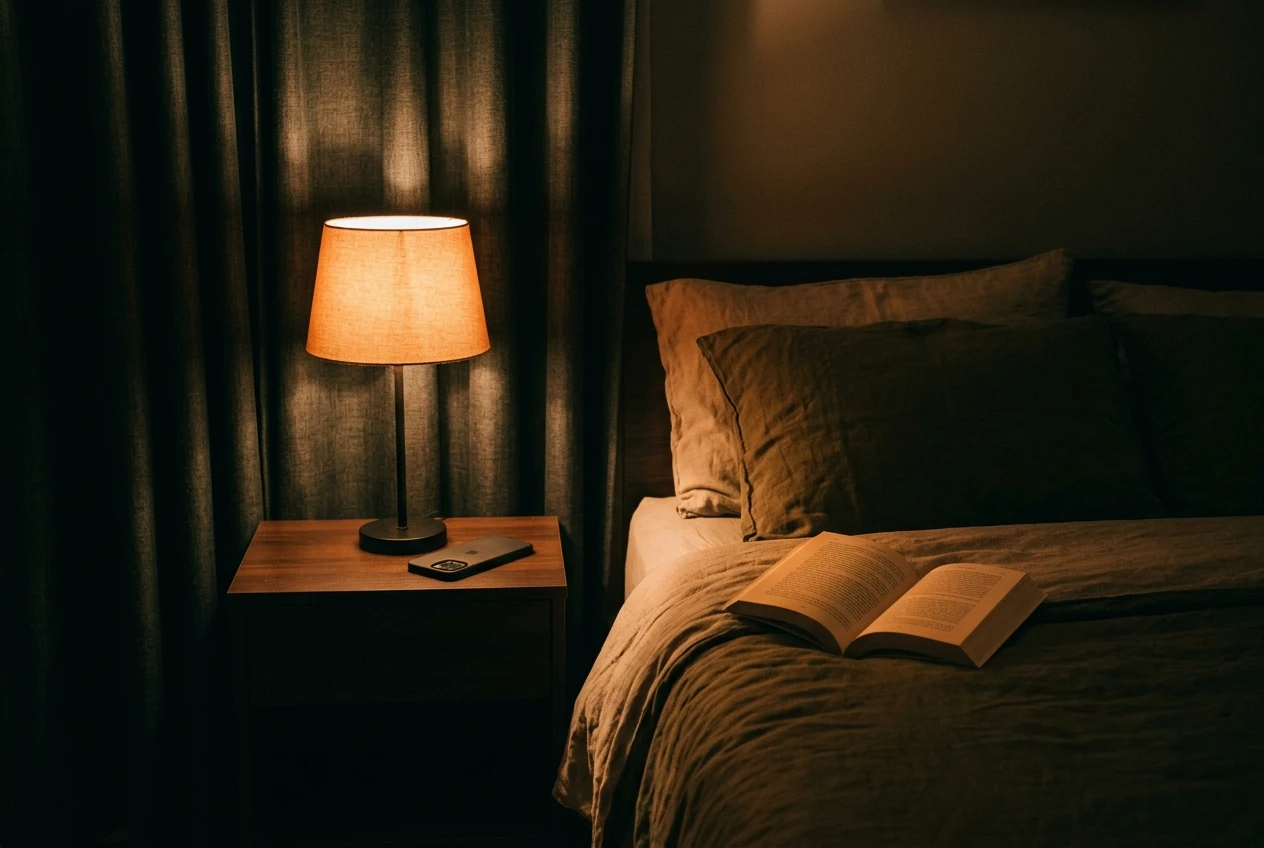
Dim the lights. In the two to three hours before bed, turn off overhead lights and use lamps instead. Lower, warmer light puts less pressure on the melatonin signal than bright white ceiling light does. You do not need to sit in the dark; you just want the room noticeably dimmer than it was at midday.
Handle screens sensibly. Phones, tablets and laptops emit light that reaches the same retinal cells. Lowering brightness, using night modes and holding devices farther from your face all reduce the dose. The content matters too: a stressful email thread keeps you alert regardless of the light. Giving yourself a stretch of screen-free time before bed is the most reliable approach, and a book or a conversation does the job well.
Keep the bedroom dark, quiet and cool. Even small amounts of light during sleep can fragment it for some people. Blackout curtains or an eye mask are cheap and effective. A cooler room helps too, because your core body temperature naturally drops as you fall asleep.
Protect the window. Pick a bedtime and wake time you can keep, then guard the time between them. A consistent sleep window is itself a cue. If you regularly stay up late and sleep in, you are asking your clock to keep moving.
Introduce these last. Evening dimming works far better on a clock that is already being anchored by morning light, because the two signals then point in the same direction.
A sample day that puts it all together, plus how to handle weekends and travel
Here is one example, assuming a 6:30 a.m. wake time and a 10:30 p.m. bedtime. Shift every time to match your own schedule; the order and spacing matter more than the clock times.
- 6:30 a.m. Wake up. Open the curtains right away.
- 6:45 a.m. Go outside for 10 to 20 minutes: a walk, coffee on the step, or the dog’s morning loop.
- 7:30 a.m. Eat your first meal at a regular time.
- Midday. Eat lunch at a similar time each day. Move around outdoors if you can.
- Early afternoon. Have your last caffeine.
- Late afternoon. Exercise, or take another walk.
- 6:30 p.m. Eat dinner, leaving a few hours before bed.
- 8:00 p.m. Dim the lights, switch to lamps and lower screen brightness.
- 9:30 p.m. Put screens away. Read, stretch gently or talk with someone.
- 10:30 p.m. Go to bed in a dark, cool room.
Weekends
The biggest threat to a settled clock is a weekend that runs two or three hours late. Sleeping in on Saturday and Sunday moves your clock later, and Monday morning then feels like jet lag without the trip. Try to keep your wake time within about an hour of your weekday time. If you stay up late on a Friday night, still get your morning light, and make up lost sleep with an earlier bedtime or a short nap rather than a long sleep-in.
Travel
When you cross time zones, the clock needs time to catch up, and light is again your main tool. For small shifts, switch to local meal and sleep times right away and get outdoor light in the local morning. For large shifts, the timing of light matters more, and light at the wrong time can push the clock the wrong way. In that case, read a travel-specific guide or ask your doctor before you go, particularly if you travel often.
Shift work
If your work schedule changes often or runs overnight, a standard plan like this will only partly fit. Consistency within your own pattern helps, and a doctor or sleep specialist can help you plan around your shifts.
When it is not just your clock: signs to talk to a doctor
Timing habits correct a drifting clock. They do not treat medical conditions, and several of those look like a body-clock problem from the outside. Talk to a doctor if any of these apply:
- Loud snoring, gasping or pauses in breathing during sleep, or waking with a dry mouth or a headache. These can point to sleep apnea, which needs proper evaluation.
- Heavy sleepiness during the day even when you are getting what should be enough sleep, or falling asleep at times that are unsafe, such as when driving.
- Trouble sleeping on most nights for several weeks, despite keeping consistent habits. Persistent insomnia has treatments that go beyond timing.
- Low mood, loss of interest or anxiety that comes with the sleep problems. Sleep and mood affect each other, and it is worth sorting out which is driving which.
- Symptoms that suggest a hormonal issue, such as unexplained weight change, very irregular periods, feeling persistently hot or cold, or unusual fatigue. A doctor can check for thyroid and other causes.
- A sleep pattern that stays stuck extremely late or early even after weeks of light and schedule correction. Some people have a naturally shifted clock that is classed as a sleep-wake phase disorder, and a specialist can help.
- Medications or conditions that affect sleep, including some prescriptions. Do not change a prescribed medication on your own; raise it with the prescriber.
Seeing a doctor does not mean abandoning the plan. Morning light, regular meals and a dark bedroom remain sound habits alongside medical care, and your doctor can tell you how best to fit them in.
Start small. Pick one anchor habit, morning light within the first hour of waking, and run it for seven days before you add the next one.