Do adaptogens help with long-term stress? The honest answer is “maybe a little, for some people, and the evidence is thinner than the bottle suggests.” Some herbs have decent human data for lowering perceived stress over a couple of months. Almost none have data showing they make you more resilient over years. Most of what you read online blurs those two claims together.
This article sorts the claims into three piles: what human trials reasonably support, what rests on animal or lab work, and what is label copy. Then it covers how to test an adaptogen on yourself as an experiment with a start and an end, so you are not left taking a capsule every morning forever on faith.
What adaptogens are supposed to do (and where the word came from)
The word “adaptogen” was coined in 1947 by Soviet toxicologist Nikolai Lazarev. He was looking for substances that raised the body’s general resistance to stress, whatever the stressor happened to be. Soviet researchers who followed him studied plants like eleuthero (Siberian ginseng) and schisandra, partly with athletes, soldiers and cosmonauts in mind.
The classic definition has three parts. An adaptogen should be safe at normal doses, it should increase resistance to a wide range of physical, chemical or biological stressors, and it should have a normalizing effect, nudging a system back toward balance instead of pushing it in one direction.
That definition is a hypothesis, not a measured category. There is no lab test that confirms a plant is an adaptogen, and the “normalizing” idea is hard to prove in people. Today the word is mostly a marketing category covering herbs and some mushrooms that are traditionally used for fatigue and stress. Some of them are worth studying. The label alone does not tell you which.
How they may influence the stress response: the HPA axis in plain English
When you perceive a threat, whether a car swerving or an email from your boss with “quick call?” as the subject line, your hypothalamus signals your pituitary gland, which signals your adrenal glands to release cortisol and related hormones. That chain is the HPA axis (hypothalamic-pituitary-adrenal). Cortisol raises blood sugar, sharpens alertness and shifts resources away from digestion and repair. Once the threat passes, cortisol feeds back to the brain and the system settles.
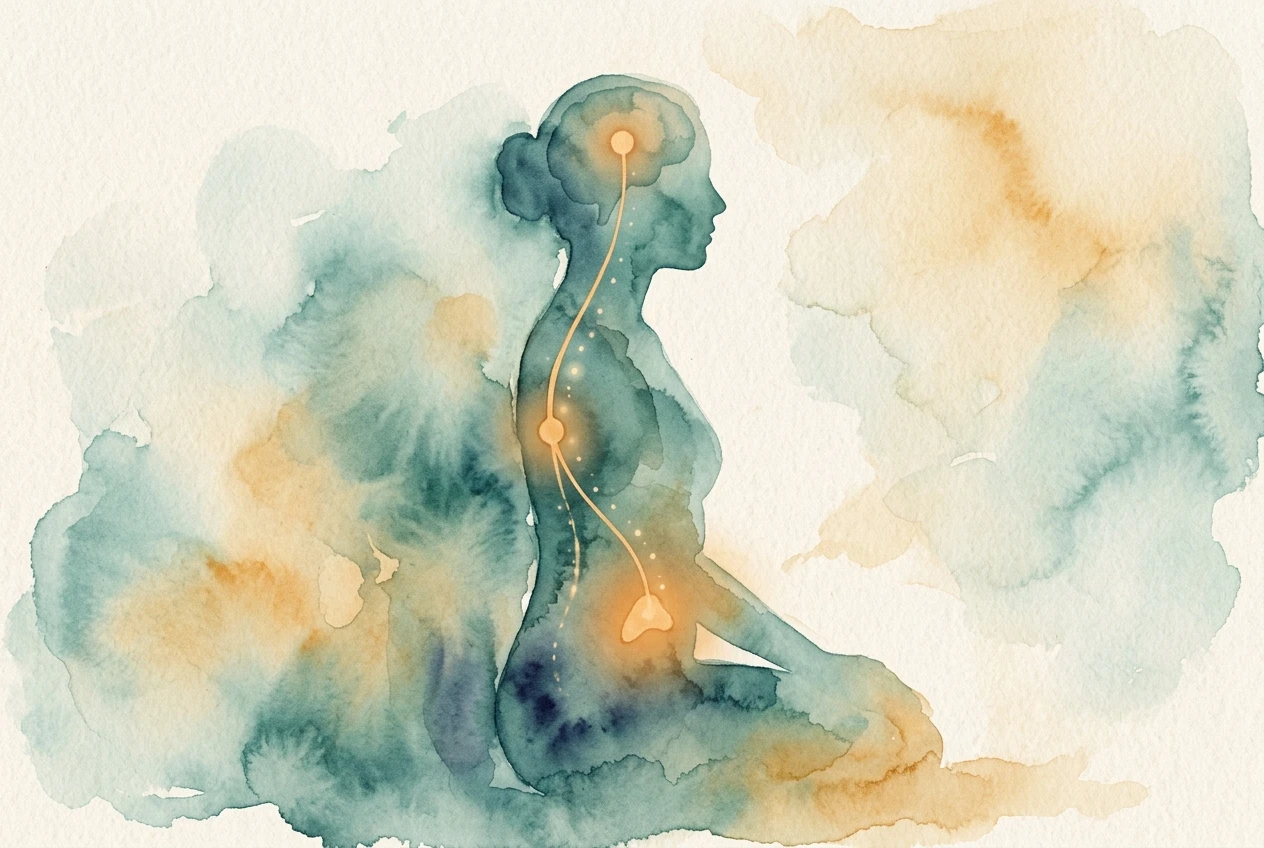
Problems arise when the alarm keeps getting triggered. Cortisol patterns can flatten or shift in time of day, and sleep, mood, appetite and blood sugar tend to wander with them. This is where adaptogens are supposed to help.
The proposed mechanisms include dampening the HPA axis response, modulating the brain’s stress-signaling chemistry, and acting on pathways involved in inflammation and oxidative stress. Much of that evidence comes from cell and rodent studies. In humans, the usual approach is to measure cortisol (in blood, saliva or hair) and score self-reported stress on questionnaires such as the Perceived Stress Scale. Those measurements are noisy. Cortisol varies with the time of day, with the last cup of coffee and with how you slept, which is one reason results across studies disagree.
Ashwagandha, rhodiola, holy basil and others: what human studies suggest versus what is still hype
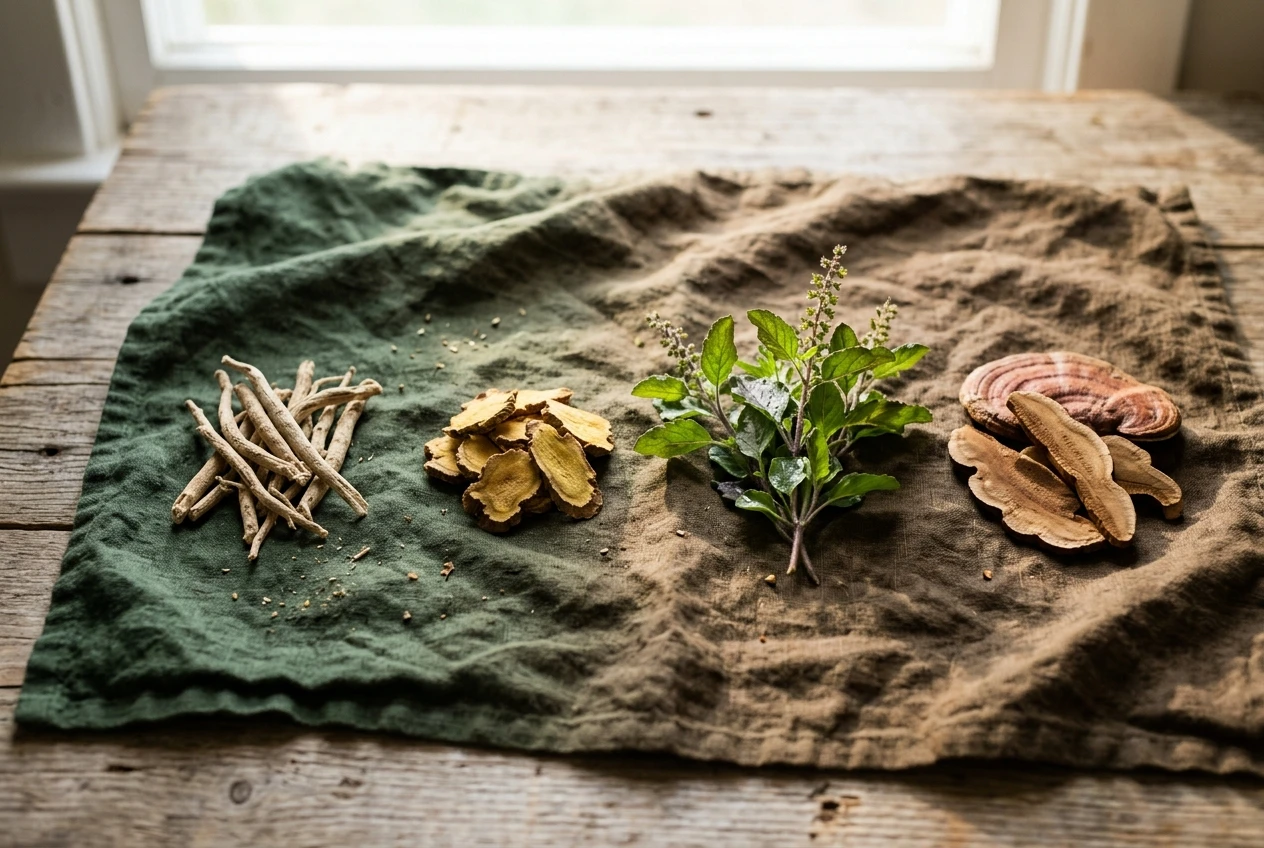
Ashwagandha (Withania somnifera)
This has the strongest human evidence of the group. Several randomized, placebo-controlled trials, generally running 6 to 12 weeks, found that root extracts reduced self-reported stress and anxiety compared with placebo, and some also found lower cortisol. That is a real signal. The caveats are real too: most trials are small, many were funded by extract manufacturers, and each used a different extract, so you cannot assume that any ashwagandha product behaves like the one in a study.
Rhodiola (Rhodiola rosea)
Rhodiola has been studied for fatigue and mental performance during stressful periods, such as exam time or work burnout. Some small trials report improvements in fatigue and concentration over a few weeks. The studies are short, often small and uneven in quality. Reasonable summary: possibly useful for stress-related fatigue in the short term, with little evidence about long-term use.
Holy basil (tulsi, Ocimum tenuiflorum)
Traditionally used in Ayurveda, holy basil has a handful of small human trials suggesting reduced stress symptoms. The body of evidence is limited, and much of the mechanistic story comes from animal and lab work. It is a plausible candidate rather than a proven one.
Panax ginseng, eleuthero, schisandra and the mushrooms
Panax ginseng and eleuthero have human data, mostly on fatigue and performance, with mixed results. Schisandra rests largely on lab and animal studies. Reishi, cordyceps and lion’s mane are often sold as adaptogens, but for stress specifically the human evidence is sparse, and what exists is mostly small trials.
What is just label copy
Claims like “balances your hormones,” “resets your adrenals” or “cures adrenal fatigue” belong in this pile. Adrenal fatigue is not a recognized medical diagnosis, and no adaptogen has been shown to rebuild your adrenal glands. If a product promises to fix a condition that medicine does not recognize, treat the promise as decoration.
Why “resilience” is a bigger claim than “less stressed this week”
Most trials answer a narrow question: after 8 weeks of this extract, did people report feeling less stressed than people taking a placebo? That is useful, but it is not resilience.
Resilience would mean you recover faster from stressors, your sleep and mood hold up under pressure, and the benefit persists or even grows over time. Showing that would require longer studies, ideally following people through real stressful events, and comparing outcomes after stopping the herb. Few trials do that.
Several things also make short-term results look better than they are:
- Placebo response. In stress and mood trials, placebo groups often improve noticeably, and that improvement can be most of the effect you would otherwise credit to the herb.
- Regression to the mean. People start supplements when they feel their worst, and most rough patches ease on their own.
- Bundled changes. People who start an adaptogen often also start sleeping better, cutting alcohol or walking more, then credit the capsule.
So when you ask whether adaptogens help with long-term stress, the careful reading is that some probably reduce perceived stress for weeks to a few months. Whether they build lasting resilience is unproven. A product can still be worth using on those terms, as long as you do not expect more from it.
Safety first: who should skip adaptogens and what to check with a clinician
“Natural” does not mean harmless. These are biologically active plants, and they can interact with medications and conditions. Talk to a pharmacist or doctor before starting, especially if any of the following applies:
- Pregnancy or breastfeeding. Ashwagandha is generally advised against in pregnancy, and safety data for most adaptogens in pregnancy and nursing is lacking.
- Thyroid conditions or thyroid medication. Ashwagandha has been reported to raise thyroid hormone levels in some people, which matters if you have hyperthyroidism or take levothyroxine.
- Autoimmune conditions or immunosuppressant drugs. Some adaptogens may stimulate immune activity.
- Liver disease or a history of liver problems. Rare cases of liver injury have been reported with ashwagandha products.
- Sedatives, antidepressants, blood pressure or diabetes medication. Adaptogens can add to sedation, interact with mood medication or lower blood pressure and blood sugar. Rhodiola can feel stimulating, and holy basil may affect blood sugar.
- Upcoming surgery. Tell your surgical team about every supplement you take.
Stop and contact a clinician if you develop yellowing skin or eyes, dark urine, severe stomach pain, palpitations, a rash or anything that feels wrong. If your stress comes with persistent low mood, panic, sleeplessness for weeks or thoughts of self-harm, that deserves professional care, not a supplement experiment.
How to run a fair 8 to 12 week trial on yourself without fooling yourself
A supplement you take on a vague hunch will always seem to be working. A structured trial gives you a better answer. Here is a straightforward design.
1. Get clearance first. Run the plan past a clinician if any item in the safety list applies, or if you take any regular medication.
2. Pick one product and change one thing. Start only one adaptogen at a time. If you start three, you will never know which one did what. Do not begin a new exercise plan or diet in the same week.
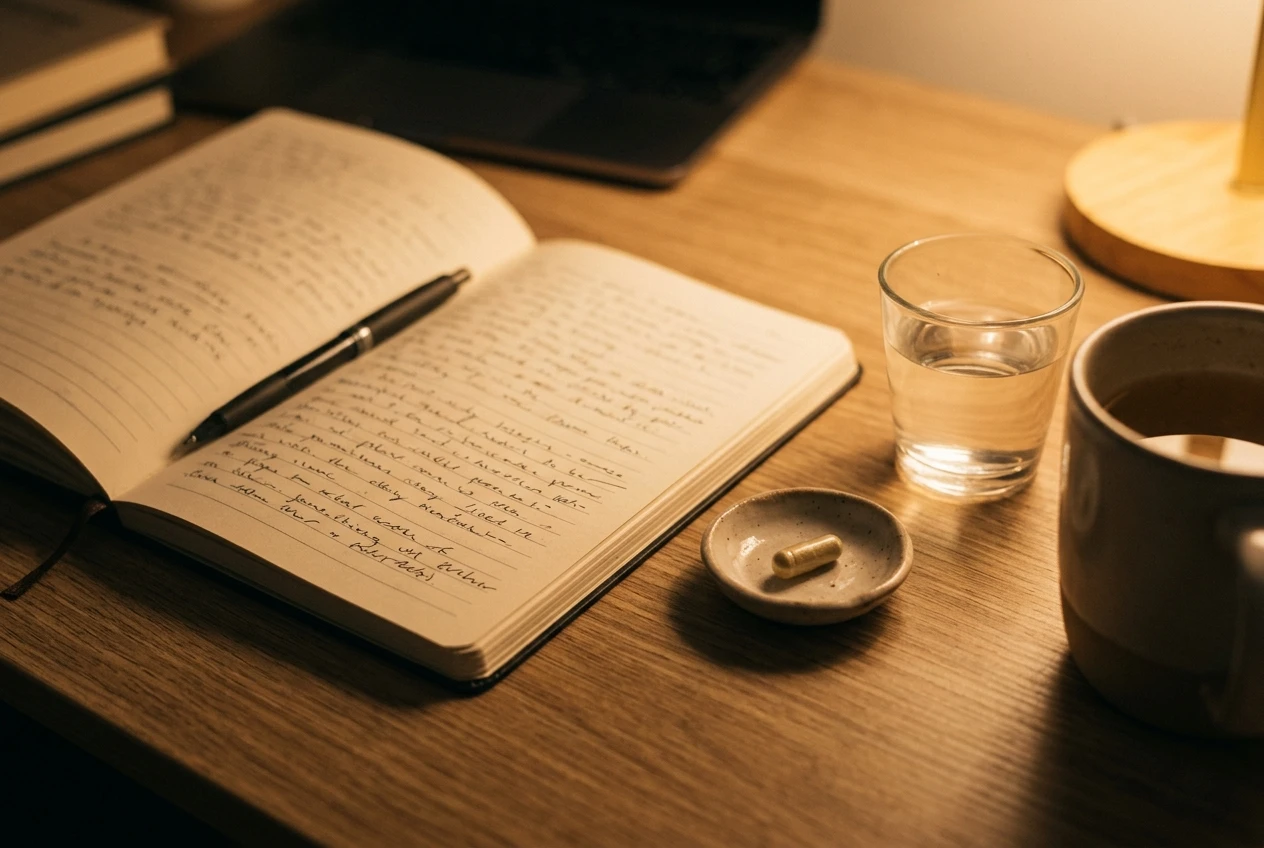
3. Record a baseline for 1 to 2 weeks. Before the first dose, log the same measures every day at the same time, ideally in the evening:
- Mood on a 1 to 10 scale
- Energy on a 1 to 10 scale
- Sleep: hours, plus how rested you felt
- Stress on a 1 to 10 scale
- Notes on anything unusual: a deadline, illness, travel, heavy drinking, a bad night
Once a week, add a short validated questionnaire if you want something more objective, such as the Perceived Stress Scale.
4. Decide your success rule in advance. For example: “If my weekly average stress and energy scores are at least 1.5 points better than baseline for four weeks in a row, I will call it a real effect.” Writing this before you start keeps you from moving the goalposts later.
5. Take it consistently. Use the dose on the label, or the range used in studies of that specific extract, at the same time each day. Skipping doses makes the data useless.
6. Check in at week 4 and week 8. If nothing has moved by week 8, you have an answer. If the effect is clear, you can continue to week 12.
7. Stop on purpose. After 8 to 12 weeks, stop and keep logging for another 2 to 4 weeks. If your scores slide back to baseline, the herb was probably doing something (or you rely on it). If they hold, you may not need it. Some practitioners recommend cycling on and off, but there is little research showing that cycling is better than a single defined course, so treat the stop as a test and not a ritual.
Bad days will occur during the trial, so judge trends over weeks and ignore individual days.
Quality markers on labels: extracts, standardization and third-party testing
In the United States, supplements are not approved by the FDA before they are sold, so the label is where you do the quality control. Look for these:
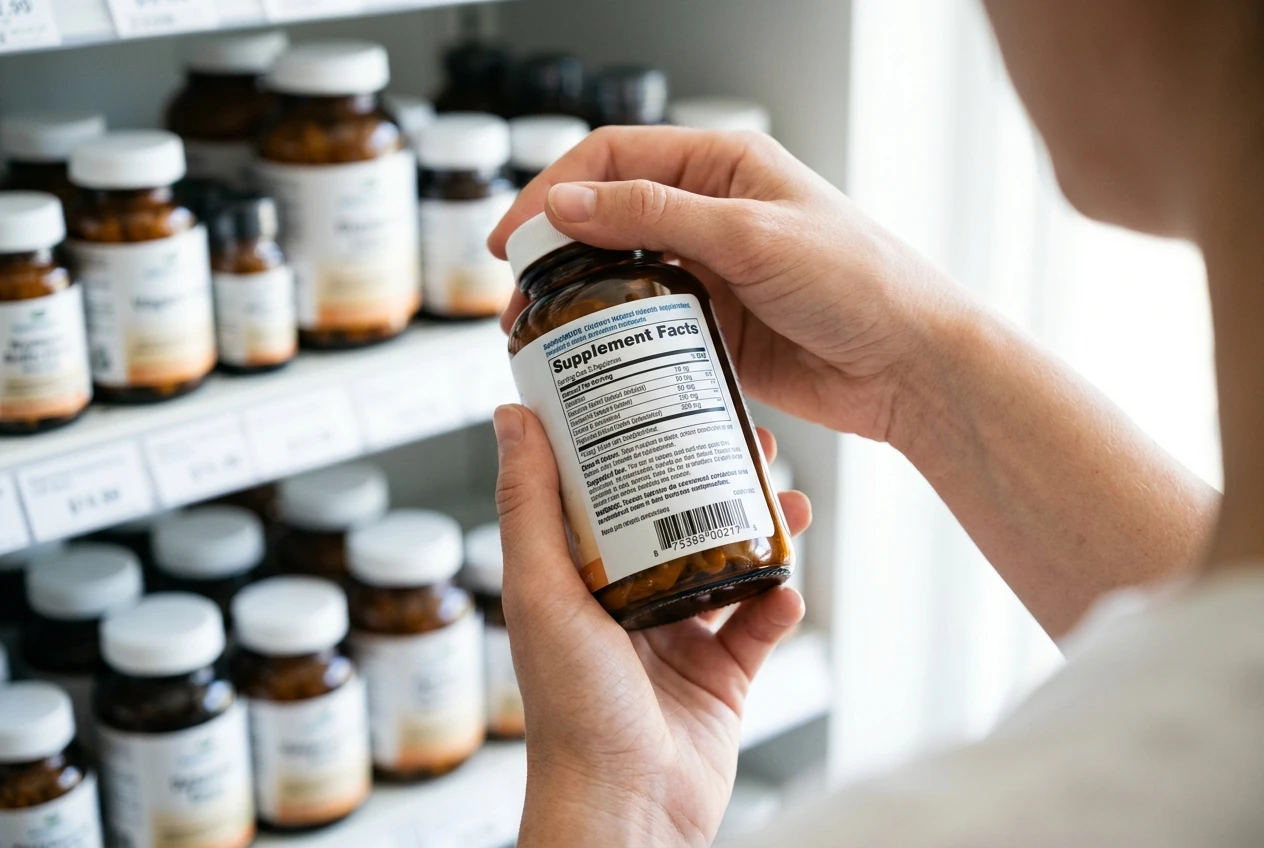
- Latin name and plant part. “Withania somnifera root extract” tells you much more than “ashwagandha blend.” Leaf-heavy products differ from root products.
- Extract, not just powder. Studies usually use concentrated extracts. The label should say which kind and give the extract ratio or the amount of plant used.
- Standardization. Look for named active compounds and percentages, such as withanolides for ashwagandha, or rosavins and salidroside for Rhodiola rosea. Standardization does not prove the product works, but it shows the maker measures something.
- Dose per serving that matches the research. If the label lists a tiny amount tucked into a multi-ingredient formula, you cannot replicate any study.
- No hidden “proprietary blend.” Blends that hide individual amounts make a fair trial impossible.
- Third-party testing. Seals from independent programs such as USP or NSF, or published lab reports from an independent lab, suggest the contents match the label and that contaminants like heavy metals were checked. This matters for botanicals, which can pick up contaminants from soil.
Higher price does not guarantee quality, and neither does a “clinically studied” badge unless you can trace which study and which extract it refers to.
Where adaptogens fit next to sleep, light and inflammation habits
If adaptogens work at all, they work at the margins. The big levers on your stress response are sleep, daylight, movement, food and how much recovery time you build into the week. A few nights of poor sleep can raise stress reactivity enough to swamp whatever a capsule is doing.

Start with your body clock. Consistent wake times, morning outdoor light and a dark, cool bedroom shape cortisol timing more reliably than any herb, and our guide on how to reset your circadian rhythm naturally walks through the practical steps.
Chronic stress, short sleep and a poor diet also feed into low-grade inflammation, which in turn makes stress harder to tolerate. If you want that connection laid out, see the science of chronic inflammation and how diet, sleep and stress drive recovery.
A sensible order of operations is to fix sleep and light first, then address food, movement and workload, and only then add an adaptogen as a single, tracked experiment. If you do it in that order and the herb does something, you can tell. If you do it in reverse, you will not know whether the herb or the better habits made the difference.
If you want a ready-made way to run the trial described above, join the email list and you will get a free adaptogen trial tracker for logging mood, sleep and energy over 8 weeks.