
Traveling often means breaking routines, tasting new foods, and dealing with limited food options; all scenarios that can lead to sneaky weight gain if I’m not careful. So how do I keep things in check while making the most of every trip? I’ve figured out a set of practical strategies that make staying healthy on the road feel less like a chore and more like a smart travel hack. I’m excited to share what I’ve learned about dodging those extra pounds. My goal is for your adventures to leave you with memories, not an unexpected change on the scale.
Why Travel Can Trigger Weight Gain
When I hit the road, my schedule turns upside down. Flights and road trips mess with meal times. Hotel breakfasts offer tempting pastries, and street food stands call my name. Add in jet lag and tiredness, and my body starts asking for comfort foods. Airports and stations mostly stock calorie-loaded snacks, and sightseeing often takes priority over staying active. Over time, these small changes can quickly add up to weight gain if I’m not paying attention.
Several studies back this up. According to the Journal of Travel Medicine, travelers gain on average one to five pounds during longer trips. That doesn’t seem like much, but when I’m traveling often—for work or back-to-back vacations—the extra weight can stick around.
Recognizing these triggers is the first step. If I know what could throw me off balance, it’s easier to make a plan that helps me avoid the classic travel weight gain trap. I try to stay aware so I can make healthier choices before little things pile up.
Smart Eating Habits While Traveling
It’s tempting to treat every meal as a special occasion when I’m traveling. Let’s be honest, food is one of the best parts of checking out a new place. I’ve learned that I can still enjoy local flavors without going overboard by following a few mindful eating habits.
- Prioritize Protein and Fiber: I stick to meals filled with lean protein (like chicken, fish, or beans) and fiber (vegetables, fruits, or wholegrains). These foods help keep me full and energized for longer and are pretty handy for curbing those random snack attacks.
- Watch Portions: Restaurant servings are often huge. I sometimes split a dish with a travel buddy or ask for a to-go box right away to save half for later.
- Limit Liquid Calories: Fancy cocktails, sugary coffees, and sodas add up fast. I usually go for water or unsweetened tea and enjoy a specialty drink as a treat, not a regular habit.
- Embrace Local Produce: Markets and fruit stands offer a chance to try what’s fresh and seasonal. Picking up some fruit or veggie snacks not only keeps meals balanced but also adds a fun way to connect with local food culture.
Staying Active Without a Gym
Finding a gym on the road isn’t always practical, but that doesn’t mean skipping activity. Some travel destinations actually make exercise pretty easy to fit into everyday plans. Even when I can’t find a gym, I stay active with what’s around me.
- Explore on Foot or by Bike: Walking tours, hikes, and bike rentals let me see the sights and get my steps in at the same time.
- Quick Workouts in the Room: I keep a list of bodyweight exercises—squats, lunges, pushups, and planks—that don’t need any equipment or much space.
- Take the Stairs: Whenever possible, I choose stairs rather than elevators, especially in airports, hotels, or train stations.
- Use Apps for Guidance: Fitness apps with short routines are a lifesaver. A ten-minute guided workout before breakfast sets the tone for my day.
Simple Tricks for Healthy Snacking
Travel schedules are unpredictable, making it super important to have backup snacks on hand. This helps me steer clear of less healthy convenience store options or room service fries.
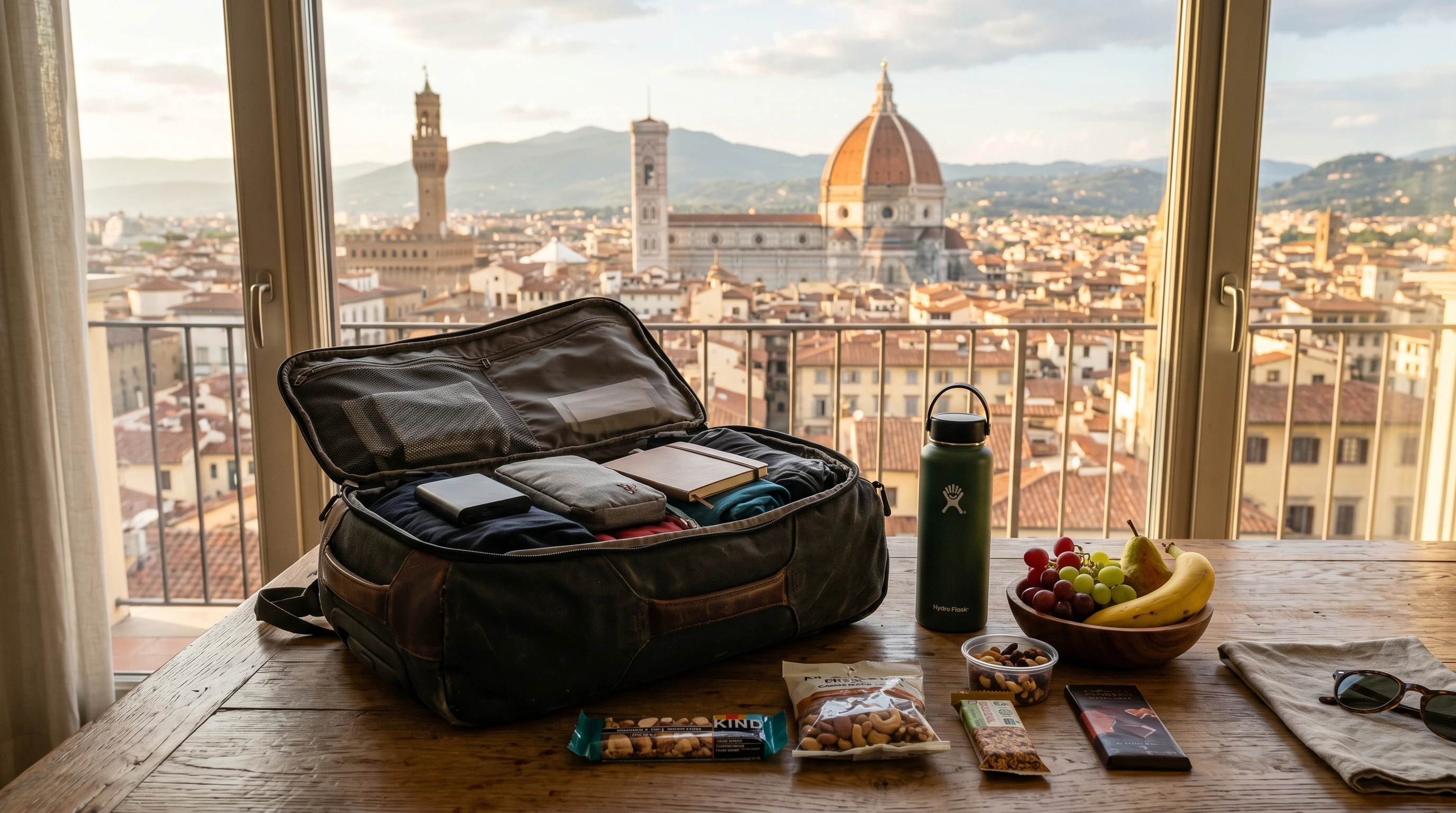
- Pack Snacks: A small stash of nuts, dried fruit, energy bars, or wholegrain crackers works wonders when hunger hits between meals.
- Visit Grocery Stores: I like to check out a local grocery store to grab yogurt, fresh fruit, or prechopped veggies. It’s usually cheaper and healthier than airport food courts.
- Mindful Snacking: Before opening a snack, I pause and ask if I’m actually hungry or just bored. Taking a minute helps me avoid mindless munching.
Dealing with Buffet and All-Inclusive Dangers
All-you-can-eat meals are a classic travel pitfall. My approach is to look at the spread before I grab a plate and pick just a few things that really stand out to me. Buffets can be overwhelming, but a plan keeps me grounded.
- One Plate Rule: I fill a single plate with a mix of veggies, some protein, and a small treat if something looks next-level cool.
- Avoid Back-to-Back Heavy Meals: If lunch is going to be big, I make breakfast or dinner lighter and the other way around when needed.
- Slow Down: I take my time eating, enjoying every bite and giving my body a chance to spot when I’m actually full.
Hydration: The Overlooked Ally
Travel can leave me more dehydrated than usual, especially during flights or in hot climates. Thirst is easy to mix up with hunger. Carrying a refillable water bottle keeps hydration on my radar. Drinking water before meals can also cut down on overeating, and sipping on water throughout the day helps me stay alert, too.
Managing Sleep and Jet Lag
Poor sleep makes my body crank up hunger hormones, especially for carbs and sugary treats. Whenever possible, I aim for a routine, keeping bedtime and wake time close to normal. On long flights, using an eye mask and minimizing screen time before rest helps me get better sleep. Good sleep keeps my cravings in check and lets me manage my energy levels during the day, even if I’m in a new time zone.
Adjusting for Special Diets or Restrictions
Dealing with food allergies, vegetarian or vegan diets, or other restrictions can feel like extra work when I’m traveling. I research typical local dishes in advance and learn a few key phrases in the local language to help with custom orders. Carrying a list of safe foods or dependable snacks fills the gaps if options are slim. When in doubt, a visit to the grocery store usually does the trick for something safe and healthy.
Common Pitfalls and How I Avoid Them
Even with the best intentions, I sometimes hit bumps on the road. Here are a few common problem spots I keep an eye out for:
- Skipping Meals: If I miss a meal, I’m more likely to grab something high-calorie on the fly. Sticking to a meal routine, even if it’s just something small, keeps my energy and blood sugar stable.
- Excess Alcohol: Vacation mode often means more drinks, but liquid calories from beer, cocktails, or wine stack up and can lower my food judgment. Alternating between alcoholic drinks and glasses of water helps me pace myself and avoid sneaky calories.
- Stress Eating: Travel isn’t always smooth. Delays, lost luggage, or language barriers can add stress. Simple relaxation techniques like deep breathing, a few minutes of meditation, or a quick walk can be more effective than reaching for comfort food. I try to remember the trip is about making memories, not stress eating.
Real-Life Travel: What Works for Me
I try to mix and match these hacks depending on my trip. If I’m on a city break, plotting out spots within walking distance and grabbing healthy breakfasts at a local cafe keeps things straightforward. On road trips, keeping a cooler in the car with wholesome sandwiches, veggies, and drinks saves me from relying on fast food. For business travel, I check out the hotel gym online and pack a resistance band for simple, space-saving workouts in my room. Paying attention to my trip style helps me stick to healthy habits and keeps me feeling my best.
- City Explorers: Use public transport and walk at every chance. Local parks or waterfronts are perfect for a casual workout and some fresh air.
- Resort or Beach Getaways: Take advantage of activity schedules; things like morning yoga, beach volleyball, or a swim. Buffets often stock plenty of healthy options, so I stick with salads, fresh grilled fish, and colorful fruits.
Frequently Asked Questions
Question: How can I eat out without feeling like I’m missing out on local cuisine?
Answer: I choose one or two local dishes to try, keep an eye on portion sizes, and fill out the meal with veggies or salad. This lets me stumble upon the local flavor without going overboard.
Question: What’s a good way to handle cravings for sweets or desserts?
Answer: I don’t skip sweets altogether. Instead, I share desserts with a travel buddy or set a limit, like one treat per day. Sometimes just having a bite or two is enough to satisfy the craving.
Question: How do I keep up with exercise when I’m really busy?
Answer: Short, intense workouts—even just ten minutes—can do the trick. Walking between meetings or sightseeing stops adds up fast by the end of the day.
Final Thoughts
Keeping weight steady on the road isn’t about following strict rules; it’s about learning what works for you and being prepared for new situations. Small habits like choosing smart meals, packing snacks, staying active, and staying hydrated really add up. Travel becomes even more rewarding when I return home feeling great, full of memories, and proud I managed my health along the way.