
If you already plunge regularly at a gym, a recovery studio or a lake, you know what the cold does for you. The harder question is which tub deserves space in your garage or on your patio. The best home cold plunge tubs are the ones that hold your chosen water temperature in your climate, survive a few years of daily use, and do not turn into a weekly cleaning project you quietly give up on.
This guide sorts home cold plunges into four types and judges each on those three things: how reliably it holds temperature, how well it is built, and how much work the water takes to keep clean. It names no specific models. Prices, specs and warranties change often, so check any model you shortlist against the manufacturer’s current page before you pay.
Who should skip the tub (and talk to a doctor first)
Cold water triggers a sharp, involuntary response: fast breathing, a jump in heart rate, and a rise in blood pressure. For most healthy adults that passes within a minute or two. For some people it is a real risk, and a tub at home, where nobody else is watching, removes the safety margin a staffed facility gives you.
Talk to your doctor before buying if any of these apply:
- A heart condition, an arrhythmia, or a history of stroke
- High blood pressure that is not well controlled
- Raynaud’s disease, cold urticaria, or any other cold-triggered condition
- Pregnancy
- Nerve damage or reduced sensation in your hands or feet, which makes it hard to notice frostbite or numbness
- A fainting history or seizures
Even with a clean bill of health, set a few house rules. Do not plunge alone when you are new to it, do not plunge after drinking alcohol, and get out when your body tells you to rather than when a timer says so. Sit down once you are in, so a dizzy spell cannot become a fall. If you want protocols for time and temperature, the cold exposure techniques post covers them. This guide is about the equipment.
What cooling power really means: chillers, ice, and the room your tub lives in
Cooling power is the tub’s ability to pull water down to your target temperature and keep it there while heat leaks in. Three things set the outcome: how you cool the water, how much heat the surroundings push back in, and how large the water volume is.
Chillers and ice
A chiller is a refrigeration unit, a compressor circuit like the one in a fridge, that removes heat from the water. Chiller capacity is usually quoted in horsepower or in a rated pull-down time. Both numbers come from the manufacturer’s test conditions, which usually assume a moderate room temperature. Ask what ambient range the rating covers, and treat anything outside it as a guess.
Ice works differently. It does not hold a temperature, it absorbs heat as it melts. A tub cooled with ice starts cold and warms through the session and through the day. Ice is a perfectly good method, but it is a recurring supply task, with a freezer to fill, bags to buy or blocks to make, and a lid that matters a great deal.
The room your tub lives in
A chiller moves heat out of the water and releases it into the air around the unit. Put the whole setup in a closed, unventilated garage in midsummer and the chiller works harder in air that is already warm. A tub in direct sun also gains heat from the sun, through the shell and the open surface.
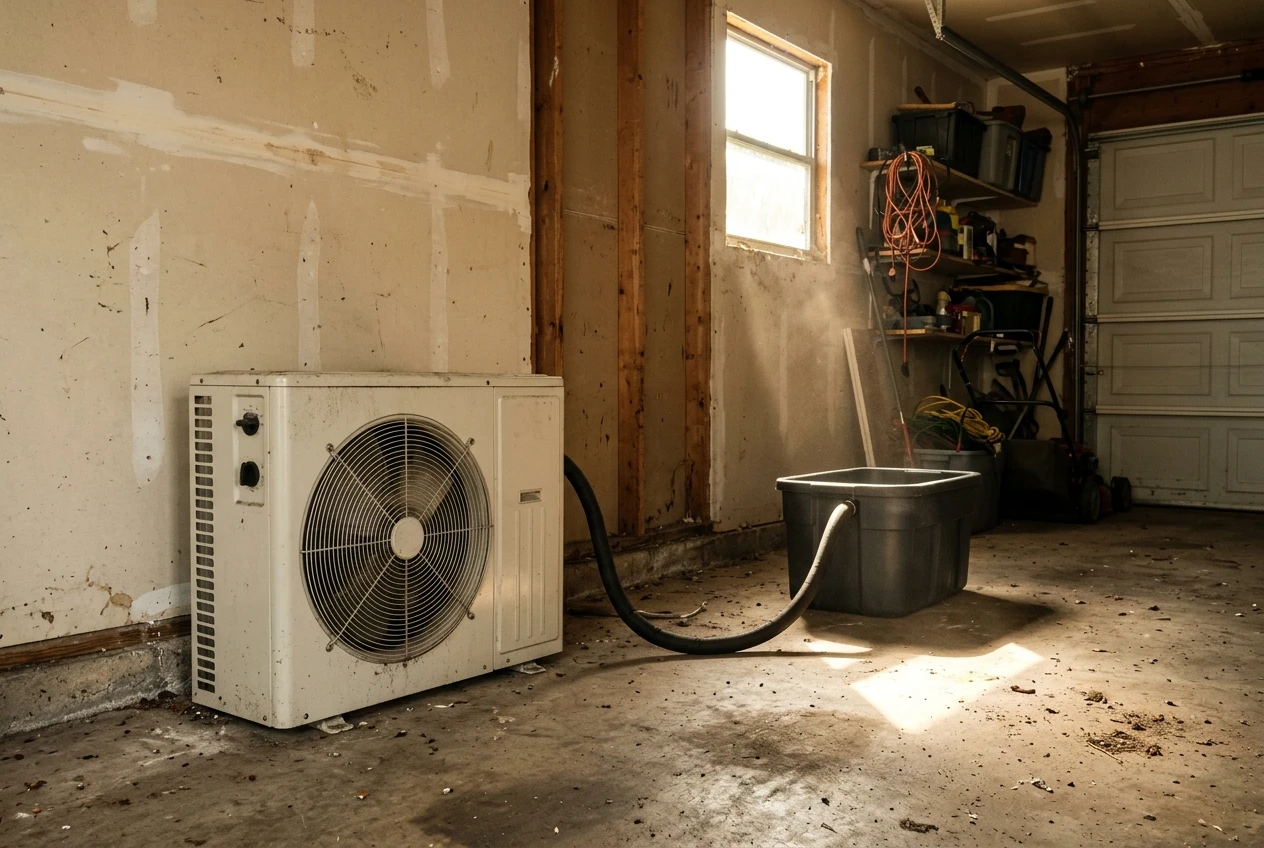
Before you compare models, answer these about your own space:
- Is the tub indoors, in a garage, or outside?
- How hot does that spot get in July and August, and how cold in January?
- Is there airflow around the chiller or compressor, or is it boxed in?
- Is there a suitable electrical supply nearby, and does it have ground-fault protection?
Water and mains electricity do not mix well, so have a qualified electrician look at the outlet if you are unsure. That is not a place to save money.
Four types of home cold plunge, and who each one suits
Ice-fed inflatables
These are insulated, inflatable tubs with a zip-on lid, filled from a hose and cooled with ice you add yourself.
Temperature: The weakest of the four at holding a target. Water starts at whatever the hose delivers, and ice brings it down. How cold you get depends on how much ice you add and how warm the day is. Temperature drifts upward after you stop adding ice.
Build: Walls are typically layered fabric or PVC with air chambers for insulation. The weak points are valves, seams and zippers. They pack down small, which suits renters and anyone who wants to store the tub between seasons.
Cleaning: Light but frequent. With no filtration, the water sits as-is, so you drain and refill more often than with filtered tubs. Add the ice cost, and the tub is cheap to buy and steady to run.
Suits: Someone who plunges a few times a week, wants the lowest entry cost, or is still deciding whether the habit sticks.
Chest freezer conversions
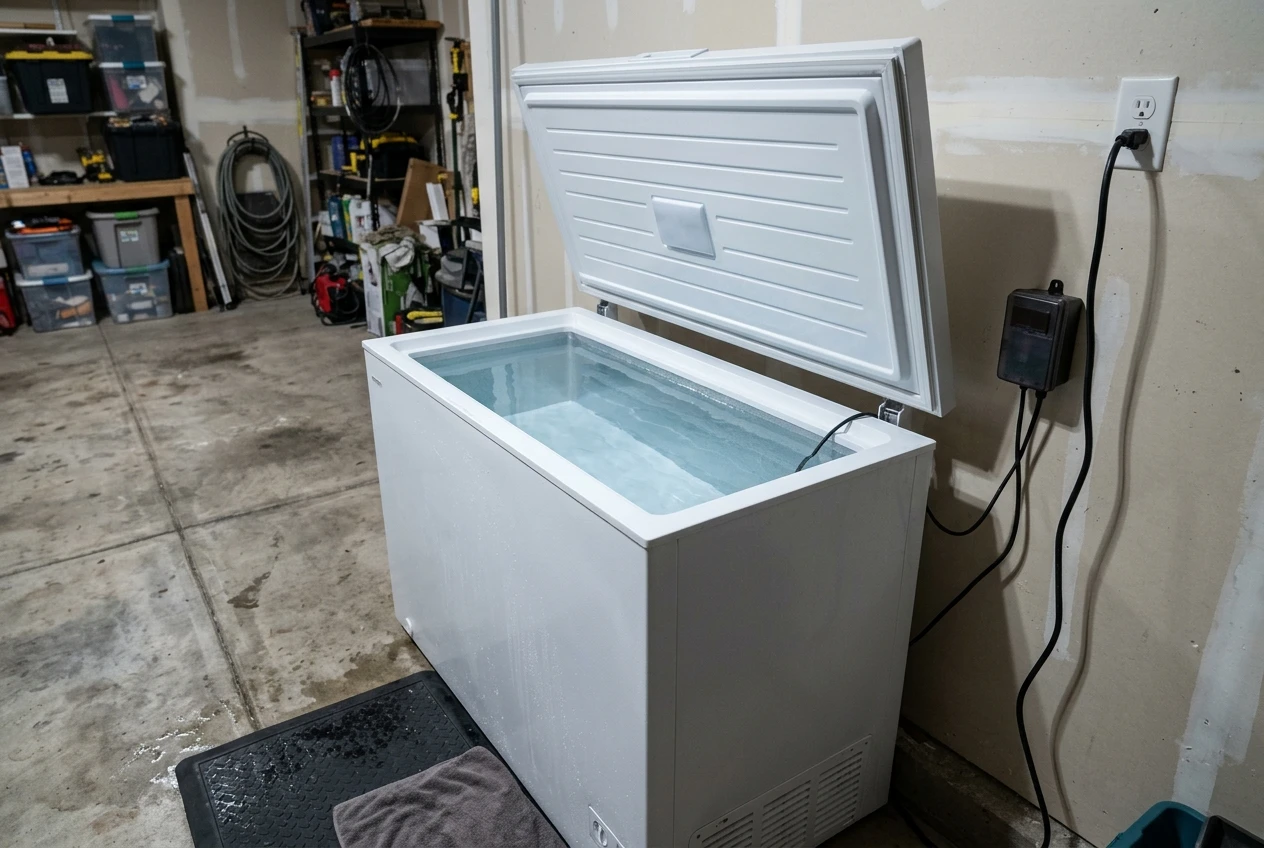
A chest freezer is emptied, lined or sealed as needed, filled with water, and fitted with an external thermostat controller so it keeps the water at a set temperature instead of freezing it solid.
Temperature: Good once it is dialed in. The cooling coils are built into the freezer walls, so the whole body of water cools. A temperature controller that overrides the stock thermostat is what makes it hold a number rather than freeze.
Build: Freezers are made to hold frozen food, not water and bathers. The lid is not made to be sat on or leaned on, the interior is not designed for constant immersion, and fitting a drain is up to you. The size is also fixed by the freezer, so check that your shoulders and knees fit before you commit.
Cleaning: Moderate. There is usually no filtration, so plan on regular drains and refills, plus wiping the walls.
Safety: This is the type where electrical safety is entirely your job. The cord, the controller, the outlet and the water all sit in the same spot. Use ground-fault protection and keep every connection dry and away from splashing. If you are not confident doing that, have an electrician help or choose another type.
Suits: A hands-on person on a modest budget who is happy to build and monitor their own setup.
Chiller-equipped tubs
This is a tub, which might be insulated, rigid or plastic, paired with a separate chiller unit that circulates the water through a filter and back.
Temperature: The most flexible. Because the chiller is separate from the tub, you can match capacity to the tub’s size and your climate. Reliable cooling is the main reason people buy this type.
Build: Several parts, each with its own failure points: the tub, the lid, the pump, the hoses and the chiller. You also have to find a spot for the chiller with good airflow. Quality varies widely between the shell, the plumbing and the chiller, and weak plumbing is the usual problem.
Cleaning: Easier than with a bare tub. Because the water circulates through a filter, you can keep it clear between drains. Filters need rinsing or replacing, and the lines need cleaning too.
Suits: Someone who plunges most days, wants set-and-forget temperature, and has room for the extra equipment.
Premium all-in-one units
These put the tub, chiller, pump, filtration and often a sanitizing system in a single body, usually with a controller or an app.
Temperature: Typically the most reliable, since the cooling and the tub are designed together. Check the stated operating range and how much the unit’s performance falls in hot ambient conditions.
Build: Often the best finish, with better-insulated shells and tighter-fitting lids. The compromise is that when something fails, it is hard to replace one part yourself. Warranty terms, who services the unit, and how long parts stay available matter more here than anywhere else.
Cleaning: The lowest effort. Built-in filtration and sanitizing do much of the work, though you still test the water and clean the filter.
Suits: Someone who plunges daily or shares the tub with a household, and who values low upkeep over low purchase price.
Build quality: insulation, lids, shells and the parts that fail first
Cold water gains heat constantly, so the shell and lid decide how hard the cooling system works. Better build means less cooling energy and steadier water.
Insulation. Look for insulation on the walls and floor, not just the lid. A thin single-wall tub in a warm garage will lose the fight with the room no matter how strong the chiller. Manufacturers should say what the insulation is and how thick. If they do not, treat that as information.
The lid. The lid is the most underrated part. An insulated, snug lid slows heat gain, keeps out leaves, dust and insects, and keeps the sun off the water. Check that it closes fully, that straps and clasps are metal or sturdy, and that you can lift it one-handed on a cold morning. Lids that are awkward get left off.
Shell materials. Common shells include rotationally molded plastic, acrylic, stainless steel and inflatable fabric. Each can be good or bad. Rigid shells hold their shape and clean easily. Inflatables are lighter and cheaper but have seams that wear. Stainless steel is durable but conducts heat, so insulation matters more. Judge a shell on thickness, finish and whether the interior has seams or crevices where residue collects.
What fails first. Across all four types, the usual failures sit in the moving and sealed parts rather than the shell:
- Pumps, which run constantly and wear out
- Hose connections and fittings, which leak when poorly clamped
- Drain valves and plugs, which crack or seep
- Lid hinges, straps and zippers
- On inflatables, air valves and seams
- On chillers, fans and the compressor if airflow is blocked
When you read a warranty, check what it covers and for how long, with the chiller, pump and shell often covered separately. A long shell warranty means little if the chiller is covered for a single year. Also check whether replacement parts are sold, because a pump that costs a reasonable amount to replace is better than a unit you must scrap.
Maintenance: water changes, filtration, sanitizing and the weekly chore list
Cold water slows microbial growth but does not stop it. Skin oils, sunscreen, sweat and dirt from your body go into the water, and untreated water in a covered tub can become cloudy or smell off sooner than you expect. Biofilm, a slimy layer of bacteria, can also build up inside pipes and filter housings where you cannot see it.
Water changes
How often you drain depends on how many people use the tub, how often, whether it is filtered, and what sanitizer you use. Unfiltered tubs usually need draining more often than filtered, sanitized ones. Your manufacturer’s guidance is the starting point, and if the water looks cloudy, smells, or feels slick, change it sooner.
Remember the cost of water. A tub drained weekly uses a lot of water over a year, and that is worth factoring into the choice between types.
Filtration and sanitizing
Filtration removes particles. Sanitizing deals with microbes. Common approaches include ozone generators, UV units, and small, measured doses of chlorine, bromine or hydrogen peroxide. Some systems combine two of these.
Whatever you use, follow the manufacturer’s instructions, never mix chemicals, and use test strips so you are measuring rather than guessing. Rinse off in the shower before you get in. It removes a surprising amount of what would otherwise end up in the water.
The weekly chore list
A reasonable routine, adjusted to your tub’s manual:
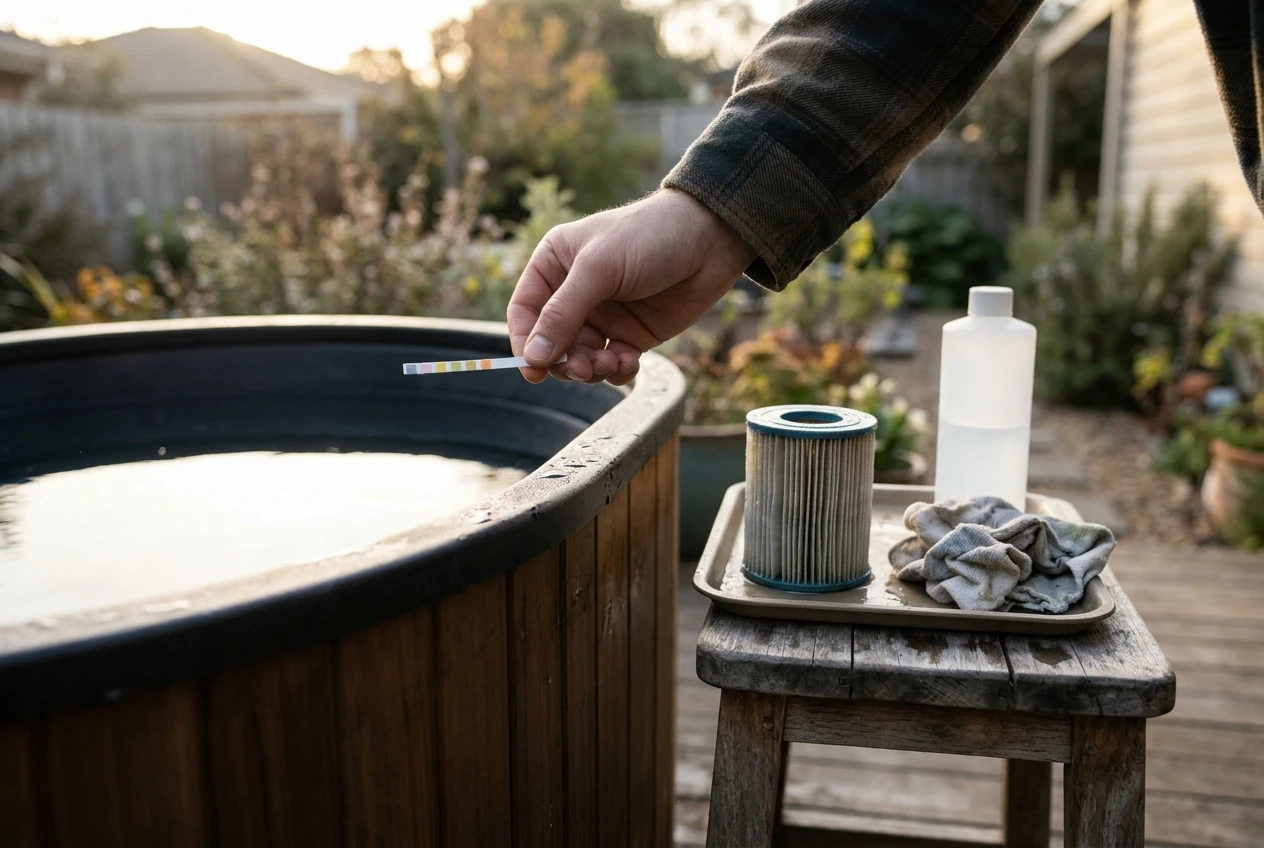
- Test the water and adjust sanitizer if you use one.
- Rinse or clean the filter.
- Wipe the waterline and any surfaces that feel slick.
- Skim out debris and check the lid seal.
- Look at hoses, fittings and the area around the tub for leaks.
- Drain and refill on the schedule your setup requires.
For a filtered, sanitized tub this takes a short stretch each week. For an unfiltered one it is lighter in the weekly check and heavier at drain time. Be honest with yourself about which chore you would skip, then pick the type that lets you skip it.
How to pick: a quick matchmaker by budget, space and training habits
Start with how often you plunge, because that decides how much convenience is worth to you.
By training habit
- Once or twice a week: An ice-fed inflatable or a stock tank is enough. Heavy automation sits idle most of the week.
- Three to five times a week: A chest freezer conversion or a chiller-equipped tub makes sense, since ice every other day becomes a chore.
- Daily, or more than one person: A chiller-equipped tub or premium all-in-one, because reliability and filtration matter at that volume.
By space
- Apartment, rented home or tight storage: An inflatable that packs down.
- Garage or covered patio: Any type, but check ventilation for the chiller.
- Outdoors in a hot climate: A chiller-equipped or premium unit rated for your ambient temperatures, with a good lid. Ice alone will struggle.
- Outdoors in a cold climate: Check whether the chiller and pump are rated to run in freezing conditions, and how you will drain the unit before a hard freeze.
By budget
Think in two figures, the purchase price and the running cost. Ice-fed setups cost little to buy but ice and water add up. Chiller and all-in-one units cost more upfront, then add electricity, filters and sanitizer. A cheaper tub that you stop using is the most expensive option.
A short checklist before you buy any model:
- Does the manufacturer state its cooling range and the ambient conditions it assumes?
- What does the warranty cover on the chiller and pump, and for how long?
- Are replacement filters and parts sold, and at what cost?
- Do you fit inside, with the water at the depth you want?
- Does your outlet and location suit it?
The cheaper route that still works: when a chest freezer or a stock tank is enough
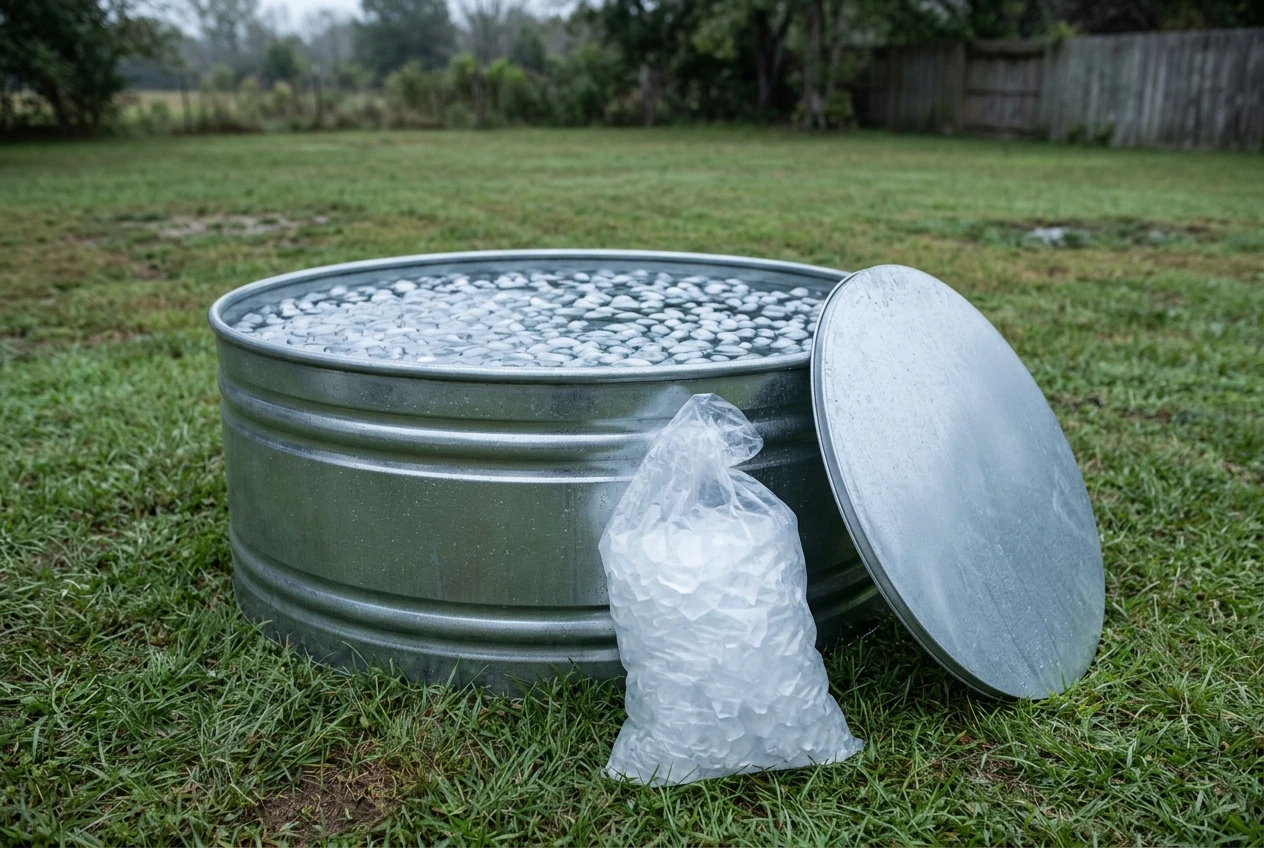
Many people spend heavily before they know whether they will keep the habit. A plain stock tank, the kind sold for watering livestock, filled with water and ice and fitted with a lid, makes a cold plunge. It has no insulation worth the name and no filtration, so it needs ice and frequent water changes, and a cover to keep out debris. That is the whole deal. For a few sessions a week, it does the job.
A chest freezer conversion is the next step up. It brings real temperature control and a fixed footprint, for the price of the freezer, a thermostat controller, and your time. Its limits are the ones above: the freezer is not designed for water, the size is whatever the freezer is, and the electrical safety is your responsibility.
Either route can serve as a trial. Run it for a couple of months. If you are still plunging three or four times a week and the ice and water changes have become the part you dislike, you have a clear reason to move up to a chiller-equipped tub or an all-in-one. If you stopped after two weeks, you spent little to find out.
Choose your tier and build the rest of your setup
Match your situation to the tier that fits: an ice-fed inflatable for occasional use and tight space, a chest freezer conversion for the hands-on budget builder, a chiller-equipped tub for regular use, or a premium all-in-one for daily use and low upkeep. Whichever you pick, compare the manufacturer’s current specs, warranty terms and price on its own page before you order.
A note on disclosure: the tub links on this page are affiliate links. If you buy through one, this site may earn a commission at no extra cost to you. That does not change what is written here, and it is why the guide sorts by type and tells you to verify specs yourself.
Your tub is one part of a recovery routine. For what else belongs alongside it, and what is worth skipping, read the recovery tools worth your money and the ones worth skipping.