
A steel mace is a long steel handle with a heavy head on the end, and that shape is why buying one is harder than buying a dumbbell. The weight sits far from your hands, so a 10 pound mace loads your shoulders, grip and trunk much harder than 10 pounds held close to the body. Most shopping mistakes come from ignoring that, along with the fact that handle length and head design change how the same weight swings.
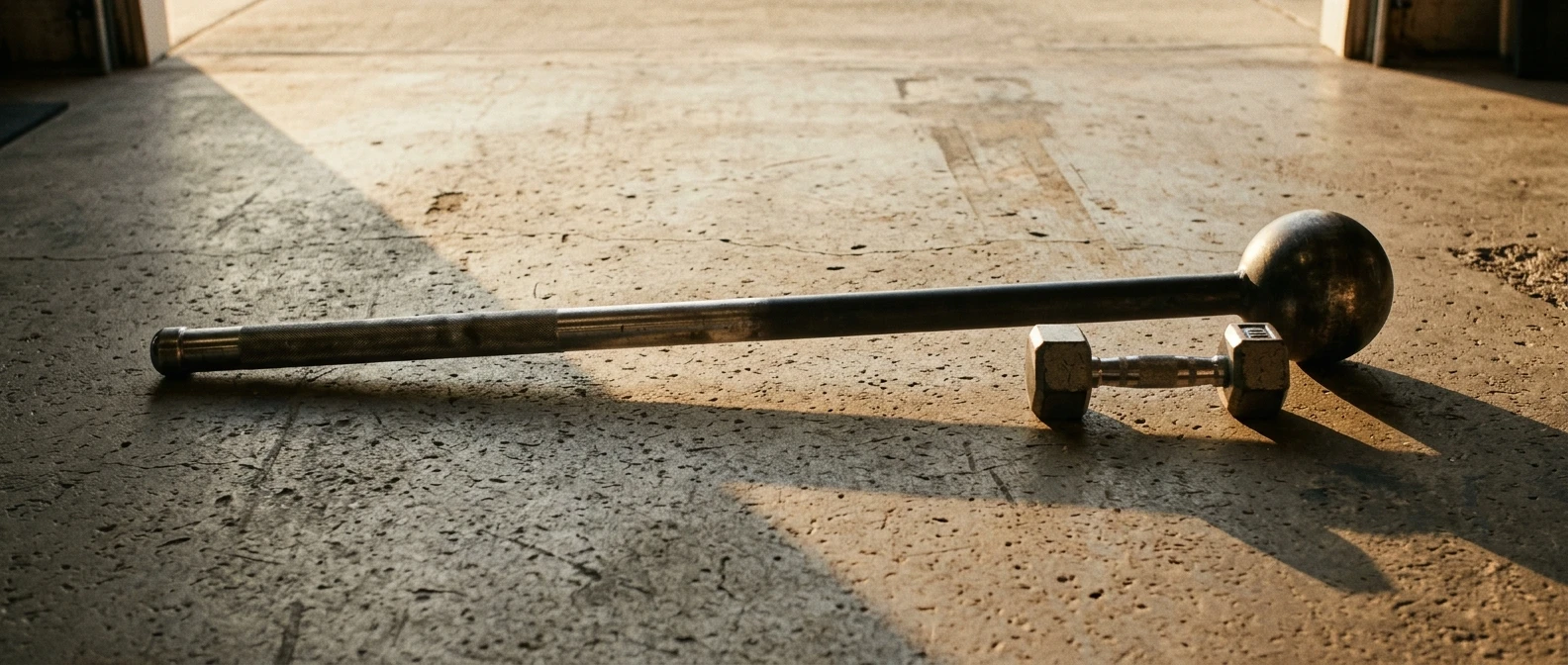
If you want to know how to choose a steel mace, start with three inputs: your current strength, the state of your shoulders, elbows and wrists, and what you want from the training. Brand comparisons come after that. This guide takes those three inputs and turns them into a weight, a handle length and a head design, then covers what to inspect before you pay and what to leave in the cart.
Why the wrong mace weight ruins good training
A mace that is too heavy does not make you stronger faster. It makes you swing differently. Once the head outruns your control, your arms start muscling it around, your shoulders shrug up toward your ears, your lower back takes over from your hips, and the movement turns into a fight. You can finish the set, but you have practiced the compensation instead of the pattern.
That matters because the appeal of mace work is whole-body, rotational movement that builds shoulder, trunk and grip strength together. Poor mechanics drop that benefit and leave you with a sore elbow.
A mace that is too light has a smaller downside. You can feel under-challenged, but you can still learn the swing, the hip drive and the timing, and you can add speed or volume to make it harder. If you have to guess, the light error costs you less than the heavy one.
There is also a plain money problem. A mace is a single, heavy, awkward item. Shipping it twice, or reselling a steel bar with scuffed paint, is not fun. Getting the first purchase close to right saves you that.
Weight first: matching a starting mace to your strength, shoulders and experience
Mace weights are sold across a wide range, from light maces in the single digits up to 25 pounds and beyond. Many general-purpose maces fall between roughly 10 and 20 pounds. Treat these as starting points, because the right number depends on who is swinging it.
Here is a way to sort yourself:
- New to lifting, or returning after a long break: Choose the lighter end of the range. Your muscles may be able to handle more than your movement skill can, and the mace punishes that gap.
- Regular lifter with healthy shoulders, but new to rotational and offset work: A middle weight usually works. Being able to press or squat a heavy barbell says little about how you will handle a load swinging behind your head.
- Experienced with clubs, kettlebells or other swinging implements: You can reasonably start heavier, but keep in mind that the mace’s leverage is different from anything you have used before.
- Past shoulder, elbow or wrist trouble: Go lighter than your strength suggests, and talk to a physical therapist or clinician before you start. Lighter loads are easier to stop, adjust and control.
A self-check you can run before you buy
If you have access to a similar implement, such as a long bar, a sledgehammer-style tool or a borrowed mace, use this as a rule of thumb. Can you do about ten slow, controlled swings to each side while keeping your ribs stacked over your hips and your shoulders away from your ears? Can you do it without your grip failing or your elbow complaining? If yes, that weight is likely a workable starting point. If the last few reps get ragged, step down.
If you cannot try one first, buy toward the lighter end of your range. It is easier to add a heavier mace later than to learn good technique on one that is too much.
Body weight is a weak guide. Two people of the same size can have very different shoulder health, grip strength and training history. Use your joints and your experience to decide, and use body weight only as a loose sanity check.
Remember also that the listed weight is the total, handle and head together. Two maces with the same label can swing differently, which brings us to the next decision.
Handle length and head shape: what changes in the swing
Handle length changes leverage. A longer handle moves the head through a bigger arc, which puts more torque on your shoulders and more demand on your grip at the same listed weight. A shorter handle gives a smaller, quicker, more controllable swing and takes less room. Handles commonly run from roughly three to four feet.
Some practical points follow from this:
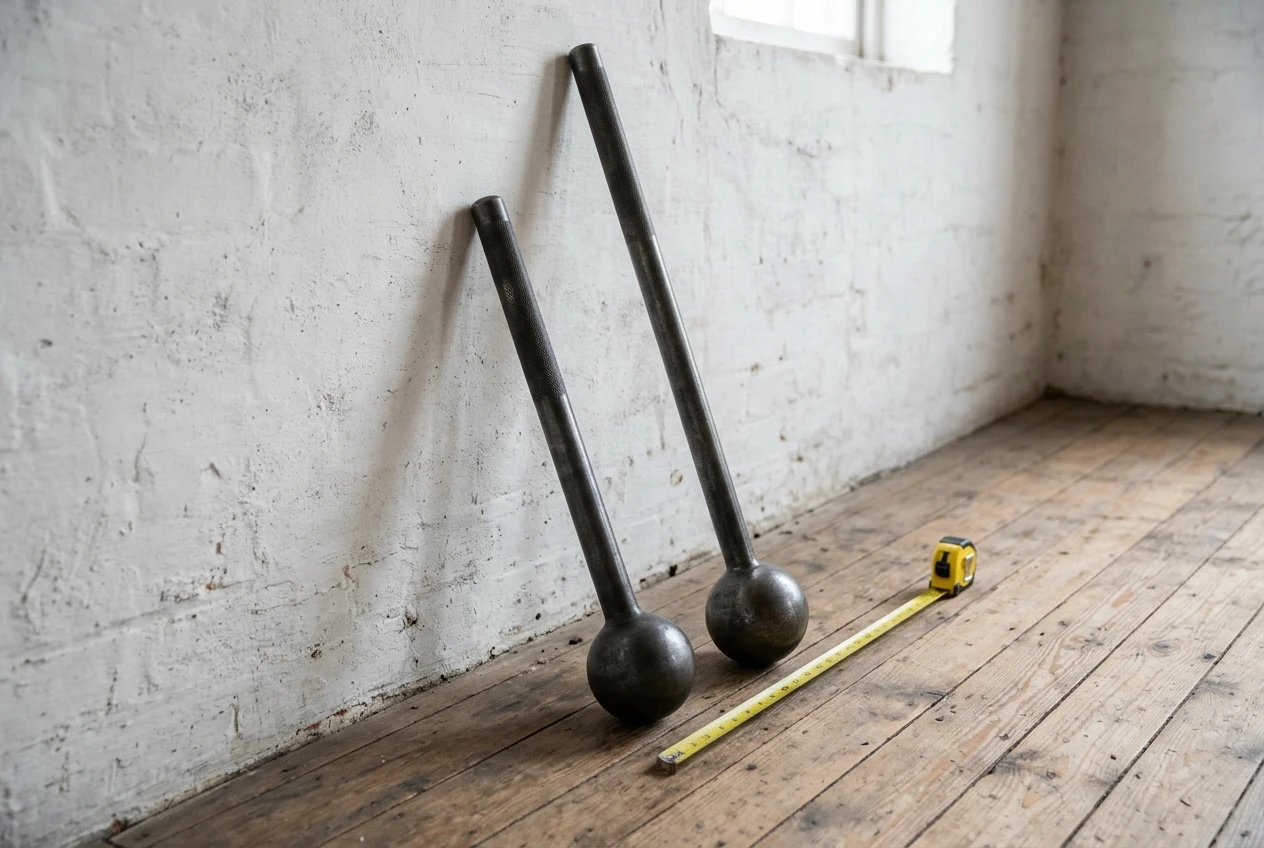
- Taller or longer-armed lifters often find longer handles comfortable, because the arc scales with their frame. Shorter lifters can find a long handle clumsy.
- Limited space favors a shorter handle. A mace swings in a wide circle, so check your ceiling height, nearby walls and anything breakable.
- Learning the movement is easier with a handle you can control, which usually means avoiding the longest option as a first purchase.
- Grip and forearm strength are taxed more by longer handles, so be honest about your starting point.
Where the weight sits
Total weight is only part of the story. A heavier head with a lighter handle puts more of the load at the far end, so the mace feels heavier and harder to redirect. A mace with a heavier handle and lighter head moves differently, with the load closer to your hands. If a seller publishes the head weight, the head diameter and the handle length, you can compare two maces properly. If they publish only a single number, ask.
Head shape
Ball-shaped heads are the most common design, and they behave predictably when they swing, land or touch the floor. Heads with flat sides, edges or other shapes deserve a closer look at how they roll, how they land against the ground and whether an edge could catch your forearm on a bad rep. A shape that looks interesting in photos is not an advantage on its own. Ask what it changes about the swing, and if the answer is vague, treat the shape as decoration.
Handle diameter matters too. A thin handle suits smaller hands and fast swings. A thick handle is harder on the grip and can tire your forearms sooner. If your hands are small, check the listed diameter before you order.
Steel, coatings and grip: materials that matter and finishes that are just marketing
What you want from the metal is simple: it should be straight, welded or joined cleanly where the head meets the handle, and finished in a way that gives you a reliable grip. Several things on a product page can distract from that.
Materials worth checking:
- Construction at the joint. The head and handle connection takes the most stress. Look for a clear description of how the two are joined and for photos of that joint up close.
- Straightness. A bent handle makes the head swing off line. Customer photos and reviews are more useful here than the studio shots.
- Accurate weight. Some sellers list weights loosely. A product page that states the actual weight, and reviews that confirm it, are good signs.
Grip and finish:
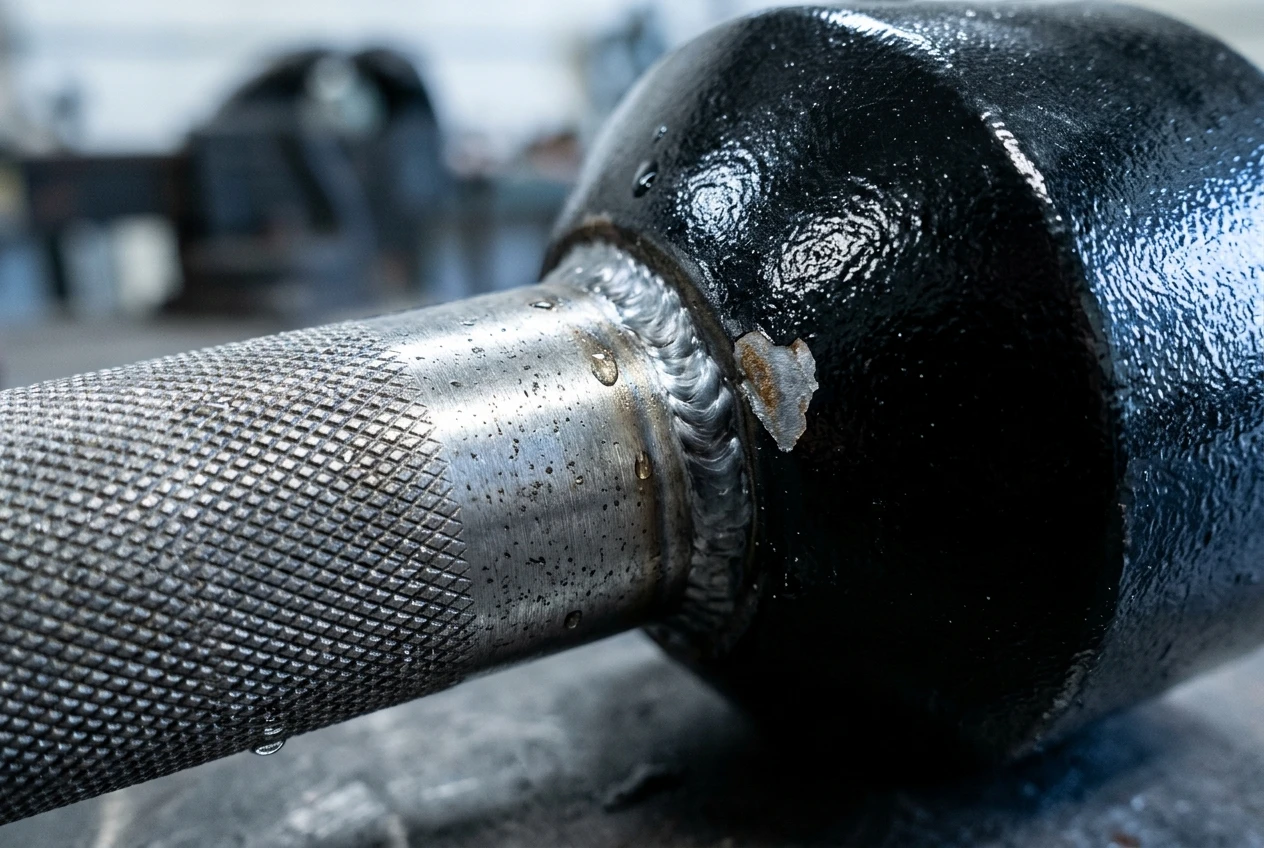
- Bare or lightly textured steel gives good traction but can rust if left in a damp garage. A wipe-down after use and dry storage help.
- Painted or powder-coated handles look good and resist rust, but a slick finish gets slippery with sweat, and the coating can chip where the head strikes the ground.
- Knurling (the pattern cut into the metal) improves grip, but aggressive knurling can tear up hands. For a mace you swing through your palms, moderate texture is easier to live with.
- Added grip wraps or rubber increase handle diameter. That can help or hurt depending on your hand size.
Marketing language to ignore: Phrases like “military grade,” “battle tested” or “elite” tell you nothing about quality. They have no specification behind them. A listing that gives you dimensions, a weight, a materials description and a clear photo of the joint is giving you more than any slogan.
A scratched finish on a mace is cosmetic. It will look used. That is fine, and it is what a tool is supposed to look like.
Brands and builders: what to check before you buy, whatever the logo says
A recognizable name is not a guarantee of fit for you, and a small builder is not automatically worse. Judge the specific mace and the seller, using this list:
- Published specifications. Total weight, head weight or diameter, handle length and handle diameter should all be easy to find. Missing numbers usually mean the seller has not thought about them, or does not want you comparing.
- Units. Check pounds versus kilograms. A 10 kg mace is more than twice the weight of a 10 lb one, and mixing them up is an expensive way to find out.
- Return and exchange policy. Mace shipping is costly, so find out who pays if the weight is wrong for you. Some sellers allow exchanges, and some do not.
- Shipping cost. Heavy steel is expensive to move. Compare the total price delivered, since a cheap mace with a high freight charge is not cheap.
- Reviews that mention time. Reviews written after weeks of use tell you about finish, joint strength and handle wear. Reviews written on delivery day tell you the box arrived.
- Customer photos. Look at the head-handle joint, the handle surface and any chipped paint in photos that did not come from the seller.
- Responsiveness. Send a question about head weight or handle diameter before you buy. If the answer is slow or vague, that is a preview of the support you will get after the sale.
- Lead times. Some builders make maces to order. That can mean a better fit, and it also means waiting. Check the timeline so you are not surprised.
None of this requires you to rank brands. Two maces with matching specifications and good build details are close enough that price, shipping and return terms can decide it.
Gear to skip, gear to add later: gloves, grip aids, second maces and floor protection
Skip at first
- Gloves. They dull the feel of the handle in your palms and can change how it rotates. Calluses are a normal result of grip training, and if your hands are tearing, the usual fix is a less aggressive handle texture or a lighter mace.
- Wrist wraps and braces. If your wrist hurts in the swing, the likely causes are a mace that is too heavy or a technique problem, and a wrap does not fix either. Persistent pain is a reason to see a clinician.
- Straps and heavy grip aids. Grip is one of the things the mace trains. Taking it out of the equation removes part of the point. Chalk is a reasonable, cheap choice if your hands sweat heavily.
- A bundle of accessories. Kits that add bands, bags and extra gadgets are often priced above the value of what is in them. Buy the mace first and decide what you need afterward.
Add soon
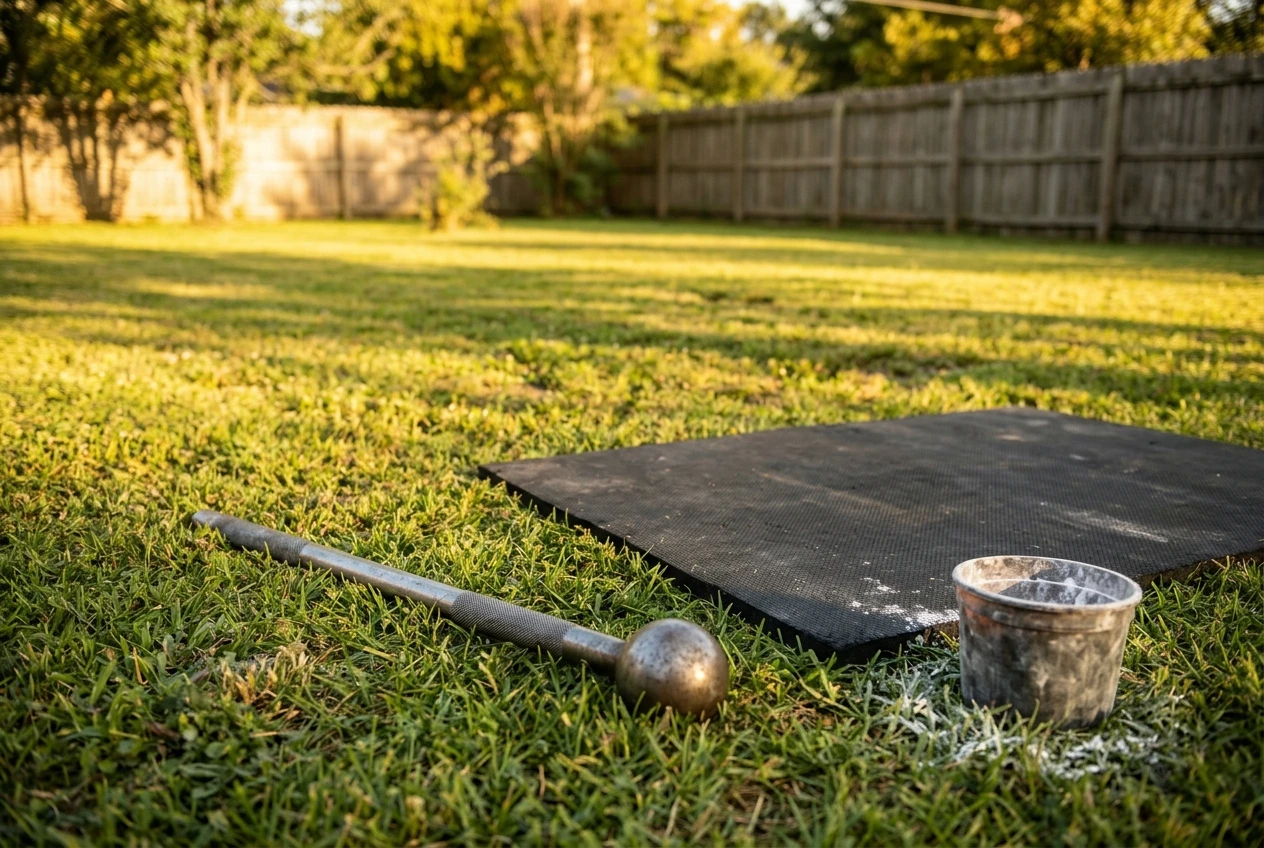
- Floor protection or the right surface. Steel heads land on the ground, and a bare garage slab or hardwood floor will take damage. Training on grass or sand, or putting down thick rubber flooring, protects the surface. It does not protect your wrists from a bad swing, so it is a surface decision and a safety decision separately.
- Clear space. You need room for the full arc plus a margin. Measure it before the mace arrives.
When to buy the second mace
One mace stops being enough when you can do your main movements with the same control at the end of a session as at the start, and the weight no longer asks anything of your technique. At that point, a second mace gives you something the first cannot.
There are two reasonable directions:
- Heavier, for strength-oriented work where you want the load to challenge your shoulders, trunk and grip.
- Lighter, for warm-ups, higher volume, speed work or days when your shoulders feel tired. A lighter mace is not a step backward. Many people use it more often than the heavy one.
If you already own one mace and feel bored, check whether the problem is the weight or the programming before you spend more. Changing tempo, adding a pause or switching the movement can make the same mace feel different. If you bought the right first weight, the second purchase should come after you can name what the first cannot do.
If you also use other recovery equipment, my guide to recovery tools worth your money applies the same buy-for-a-reason approach to that side of training.
Your buying checklist, and where to go once the mace arrives
Before you click buy, run through this:
- You have named your goal: general strength and mobility, rotational power, grip, or shoulder conditioning.
- You have picked a starting weight toward the lighter end of your range, based on your experience and your joints, and checked it against the slow-swing test.
- You know the handle length that fits your height and your available space.
- The listing states total weight, head size, handle length and handle diameter, and the units are the ones you think they are.
- The head and handle joint looks clean in photos from real customers.
- The finish suits your hands, with texture that grips without tearing skin.
- You know the delivered price, the return policy and the lead time.
- You have a surface or floor plan that will not be wrecked by a steel head.
- You are not buying gloves, wraps or a bundle you have no use for yet.
If any of those boxes are empty, fill them before you order. A few minutes of checking costs less than another shipment.
Once the mace arrives, you have two places to go. Start with the warm-up: my piece on how mace training can improve shoulder mobility and stability covers the preparation that protects the joints you are about to load. When you are ready to put the mace to work, the advanced mace training protocols article covers what to do with it and how to program the movements.