Does hydrogen water help with muscle recovery? A few small human trials in athletes say it might, mostly through effects on fatigue ratings and blood lactate. None of them is large or long enough to settle the question. This article goes through what those trials measured, what they did not, and who could reasonably spend money on it.
What hydrogen water is, and why people think it helps athletes
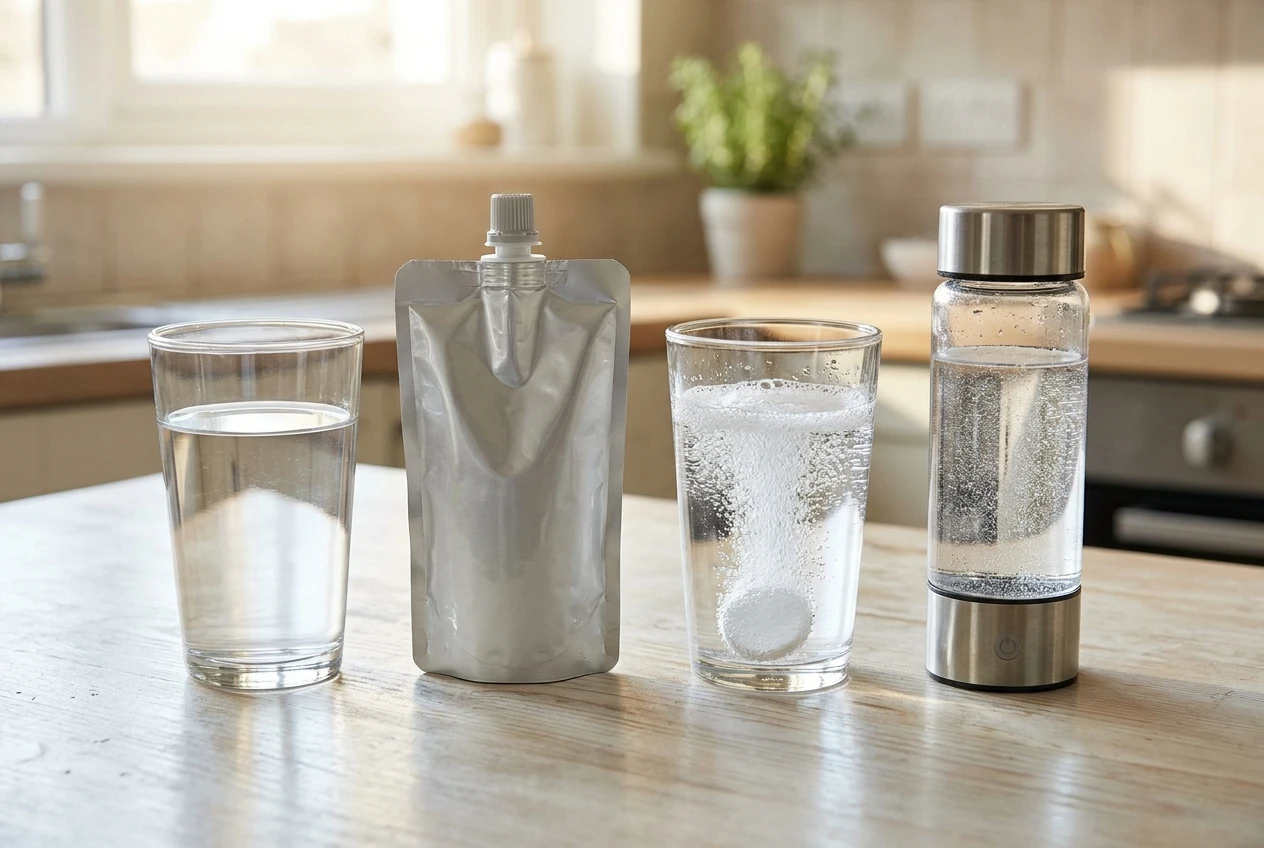
Hydrogen water is ordinary drinking water with molecular hydrogen (H2) dissolved in it. You get it from pre-filled pouches or cans, from tablets that fizz in a glass, or from a machine that produces hydrogen by electrolysis. It is not “water with extra hydrogen atoms” in any chemical sense. It is water with a dissolved gas, like soda water, except the gas is hydrogen and it stays dissolved only in small amounts.
The one-sentence reason people think it helps athletes: hard exercise produces reactive oxygen species, and lab work suggests molecular hydrogen can neutralise the most damaging of them, the hydroxyl radical. The best-known source is a cell and rodent study published in 2007. Most of the marketing traces back to it.
That is a reasonable starting hypothesis. A hypothesis from cells and rodents is not a result in a person who just finished a hard interval session, which is where the rest of this article spends its time.
Oxidative stress after hard training: the useful part and the problem part
Muscles make more reactive oxygen species when you train hard. Some of that is damaging, but some of it is a signal. Those molecules help trigger the adaptations you are training for, including new mitochondria and better antioxidant defences in the muscle itself.
This is why the antioxidant story is more complicated than “less oxidative stress is better.” Some studies on high-dose vitamin C and E found that the supplements blunted certain training adaptations. The results are mixed and depend on dose, timing and the measure used, but they are enough to make a blanket “mop up all the radicals” approach look questionable.
The problem part is real too. After a very hard or unfamiliar session, or when you stack sessions without enough gap, oxidative stress and muscle damage can pile up. You feel it as lingering soreness, heavy legs and a drop in the work you can do at the next session.
So the useful question about hydrogen is whether it reduces the excess damage without switching off the signal. Hydrogen’s selectivity for the nastiest radicals is the lab argument that it might. That selectivity has been shown in test tubes and animals. How far it carries over to a person drinking a glass of water is unclear.
What the athlete studies actually measured
The human research on hydrogen-rich water in athletes is a collection of small trials. Typical designs are crossovers, where each participant does a hard session once after hydrogen water and once after plain water, with a gap between. Participants have often numbered in the tens, not the hundreds, and many trials covered a single session or a few days.
The outcomes they reported fall into a few groups:
- Blood lactate during or after exercise. Some trials reported lower lactate or a faster fall in lactate after hydrogen water. Others found no difference.
- Perceived fatigue and exertion. Several studies found lower ratings of fatigue or effort on hydrogen water, which is a subjective measure.
- Oxidative stress markers in blood. Some trials saw changes in markers of oxidative damage or antioxidant capacity. These markers are indirect, and different studies use different ones, so they are hard to compare.
- Performance and muscle function. A few reported smaller drops in muscle output after hard exercise. Others found no performance change at all.
Read that list again for what is missing. There are very few trials that follow athletes through weeks of training and show better adaptation, fewer missed sessions or faster return to full performance. The research mostly asks whether a number changed in the hours after one workout. It rarely asks whether the athlete ended up fitter.
Lactate deserves its own caution. It is a marker of exercise intensity and metabolism, not a measure of recovery. A lower reading at a given workload may mean something, but “lactate went down” is not the same sentence as “you recovered faster.” Perceived fatigue is closer to what you care about, though it is also the measure most open to expectation.
I am describing the body of research in general terms here. If you want exact figures, find the individual papers and look at the sample size, the dose of hydrogen, the timing and the outcome that was pre-specified, because those details vary from trial to trial.
Where the evidence is thin: placebo, product differences and escaping hydrogen
Placebo and blinding
Fatigue ratings are the outcome where placebo effects are strongest. If you believe a drink helps, you rate your legs as fresher. Good trials try to blind participants by serving hydrogen water and plain water from identical containers. That works only if the two taste and look the same. Hydrogen water is usually indistinguishable by sight, but products made with tablets can taste slightly different, and a participant who works out which is which has been unblinded.
Small trials also face the usual statistical problem: with few participants, a chance difference in one measure can look like a finding. When a study measures many outcomes, a few will move by luck. The pattern across trials, with some outcomes improving in some studies and not in others, is what you would expect from a modest real effect, but also from noise.
Products are not interchangeable
Different studies used different amounts of dissolved hydrogen, different delivery methods and different timing, such as before exercise, after, or both. A trial using freshly produced water at a known concentration tells you little about a pouch that has sat in a warehouse. There is no accepted standard dose for athletes, so a result from one product cannot be assumed for another.
Hydrogen escapes
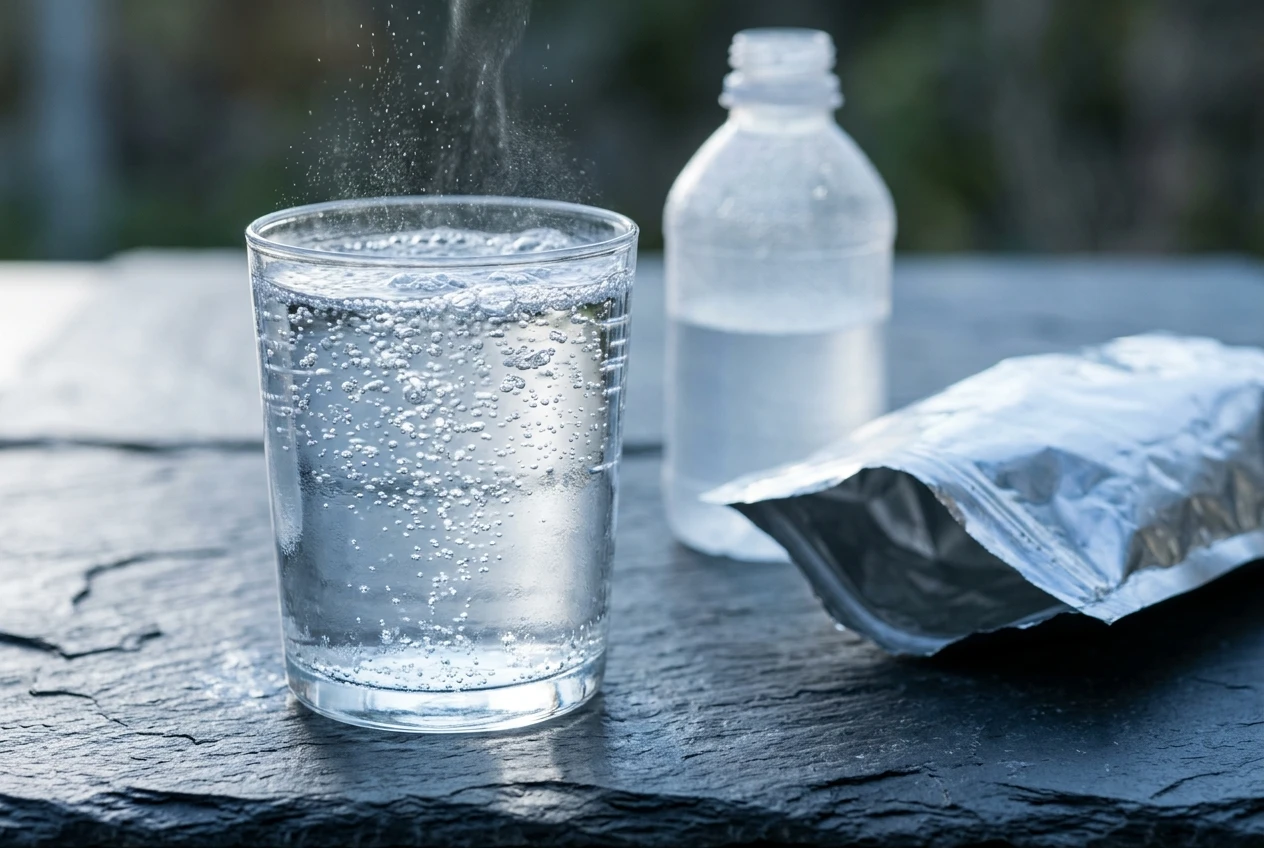
Hydrogen is the smallest molecule there is, and it leaves water readily. At normal room temperature and pressure, water can hold only a small amount, on the order of 1.6 milligrams per litre at most. Once you open a container, the gas starts leaving. Plastic bottles let it diffuse through the walls over time. Aluminium pouches and cans hold it better than plastic, but they are not perfect, and they lose it quickly after opening.
This matters for the studies and for you. The concentration in the research was whatever the researchers delivered. The concentration in your glass depends on how the product was made, how long it was stored, and how long it sat after you opened it. Many products list a concentration at the time of filling, which says nothing about what remains when you drink.
How hydrogen water compares with the cheap basics
Recovery from hard training depends mostly on a short list of things, and none of them comes in a pouch:
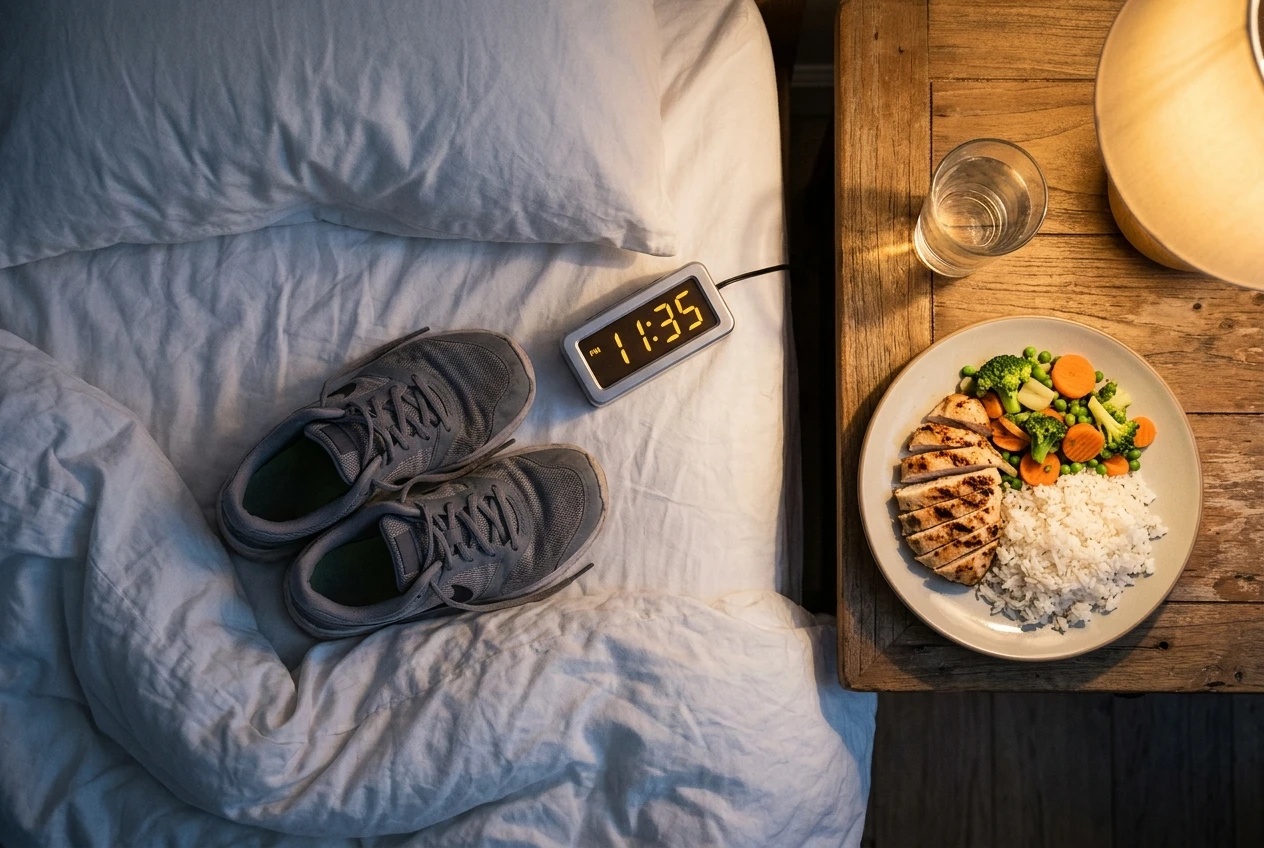
- Sleep. It is the strongest recovery tool available, and it costs nothing. If your sleep is short or irregular, fixing it will outperform any drink. If that is your weak point, the guide on resetting your circadian rhythm naturally is a better place to put your effort first.
- Food. Enough total energy, enough protein spread through the day, and carbohydrate in proportion to how much you train. Under-eating relative to training load can look like poor recovery and no supplement fixes it.
- Plain water. Dehydration makes sessions feel harder and recovery feel worse. Hydrogen water is also water, so any trial that compared it with a no-drink condition would confound hydration with hydrogen. Good trials compare against plain water, and the effects they report are on top of normal hydration.
- Training load management. Easy days, deload weeks and not stacking hard sessions back to back reduce the oxidative load before it starts.
Hydrogen water belongs after those, as a possible small extra. If sleep, food and hydration are not in place, buying hydrogen water is spending on the least important variable. That ordering holds even if the trials are right about the effect, because the size of the effect they found is small compared with what a week of poor sleep does.
Safety, cost and how to buy honestly
Safety
Hydrogen is not known to be harmful at the concentrations in drinking water, and the human trials have reported few or no adverse effects. The more practical safety questions concern the products. Tablets typically use magnesium reacting with water, which also adds magnesium and leaves a residue, so check the label if you take magnesium separately or have kidney problems. If you have a medical condition or take medication, ask your doctor before adding a new supplement to your routine.
Cost
The cost question is cost per serving over a month, not the price of one pouch or one machine. Work it out: price of the pack divided by the number of servings, multiplied by how many days you would drink it. Compare that figure with what else you could spend the same money on, such as better food, a more comfortable bed or a coach. A machine has a high upfront cost and replaceable parts, and the water it makes is only as good as the design and maintenance.
Buying honestly
- Pouches and cans. Look for aluminium packaging, a stated hydrogen concentration at the time of filling, and a fill or expiry date. Drink it soon after opening.
- Tablets. Cheaper per serving in many cases, with a concentration that depends on how you use them. Follow the instructions about water volume and drink straight away, since the gas starts leaving as soon as the fizzing stops.
- Machines. Hydrogen water generators vary widely. Look for independent testing of the hydrogen output, information on how the unit handles byproducts of electrolysis, and the cost of replacement cartridges or electrodes. Be wary of claims that offer no measured concentration.
- Claims to ignore. Anything promising to cure, detox or reverse ageing goes beyond what the athlete studies measured.
Who might reasonably try it
Hydrogen water suits a narrow group: an athlete or active adult whose sleep, food and training load are already in good shape, who trains hard often enough that recovery is the bottleneck, who can afford the cost per serving without it displacing something more useful, and who is happy to run a fair test on themselves. Someone curious about an all-natural, low-risk addition fits.
Skip it if you are still sorting out the basics, if the monthly cost would strain your budget, or if you are hoping for a visible performance jump. The evidence does not support expecting one. Occasional exercisers have even less to gain, since there is little exercise-induced oxidative stress to modify.
A simple two-week self-test
You can check whether hydrogen water does anything for you in two weeks, as long as you control for expectation. The aim is a fair comparison, not proof for anyone else.
What to track. Use your normal training log and add a few lines each day, kept to the same time of day:
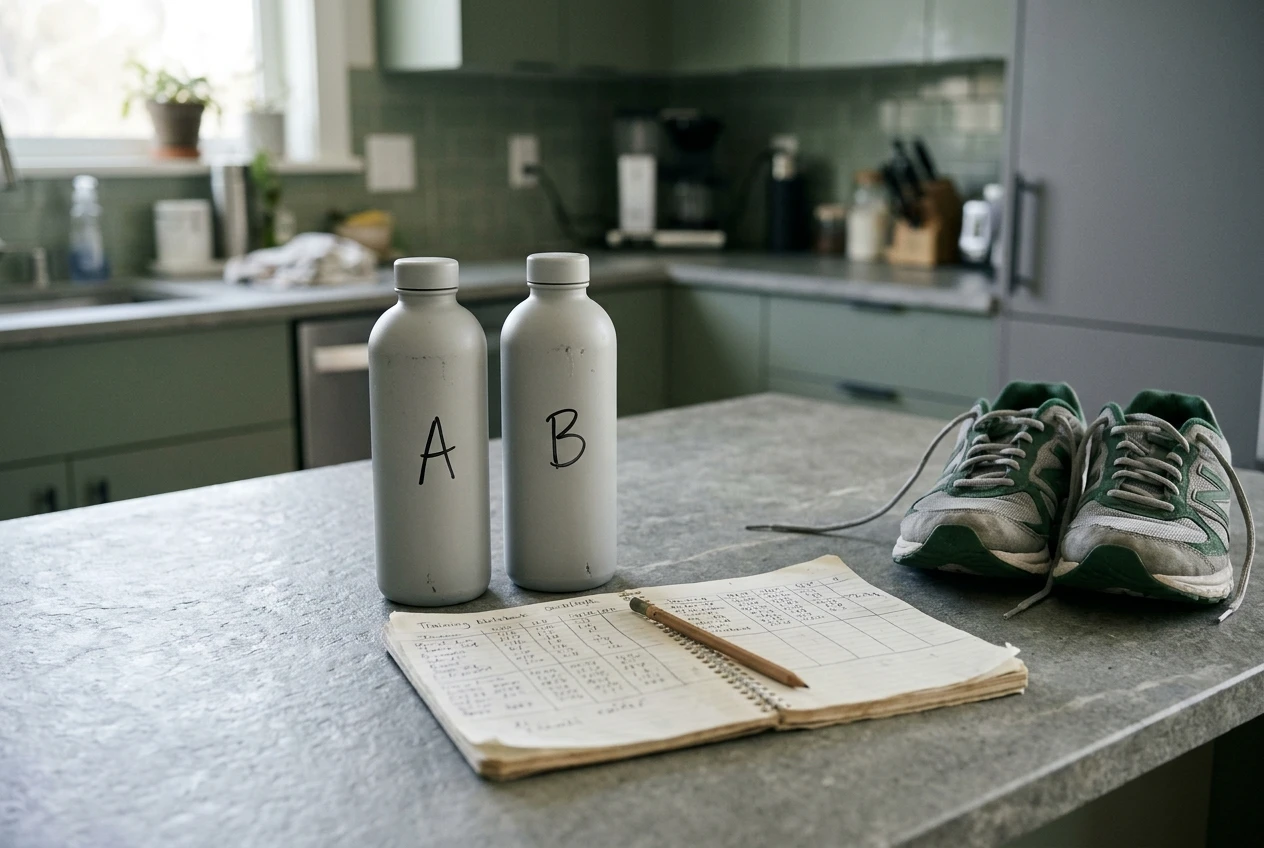
- Morning soreness on a 1 to 10 scale
- Perceived fatigue or how heavy your legs feel, also 1 to 10
- Session effort rating (RPE) and the main session type
- Sleep hours and, if you use a device, resting heart rate
Keep it to a handful of numbers so it does not become a chore. The approach in how to track your own biomarkers without letting the numbers run your life applies here: choose a few measures, record them consistently and look for patterns across days instead of reacting to one reading.
How to set it up.
- Keep training as normal for the two weeks. Do not change your food, sleep routine or program at the same time.
- Ask someone to fill two identical opaque bottles each day, one with freshly made hydrogen water and one with plain water, marked only A and B. Have them shuffle which days get which, so you do not know the pattern.
- Drink the bottle after hard sessions according to the product instructions, and always drink it soon after it is filled.
- Log your numbers each morning, without checking which bottle you had.
- After 14 days, have your helper reveal the schedule. Compare average soreness and fatigue ratings on hydrogen days versus plain days, particularly the day after your hardest sessions.
How to read the result. A single-person test with this few days is noisy. A hard session on one day and an easy one on another will swamp a small effect, so compare similar sessions where you can. If the numbers are about the same on both kinds of day, the product is not doing enough for you to justify the cost. If hydrogen days are consistently better on soreness and fatigue, and the difference is clear in your log, that is a reasonable personal case for continuing, with the caveat that it was one person over two weeks.
If you cannot find someone to help, a second best is to alternate days openly. It is weaker because you will know which day is which, so treat a small difference with suspicion.
Once you have your result, see where hydrogen water sits next to other things you might spend on in the ranking of recovery tools worth your money and the ones worth skipping.